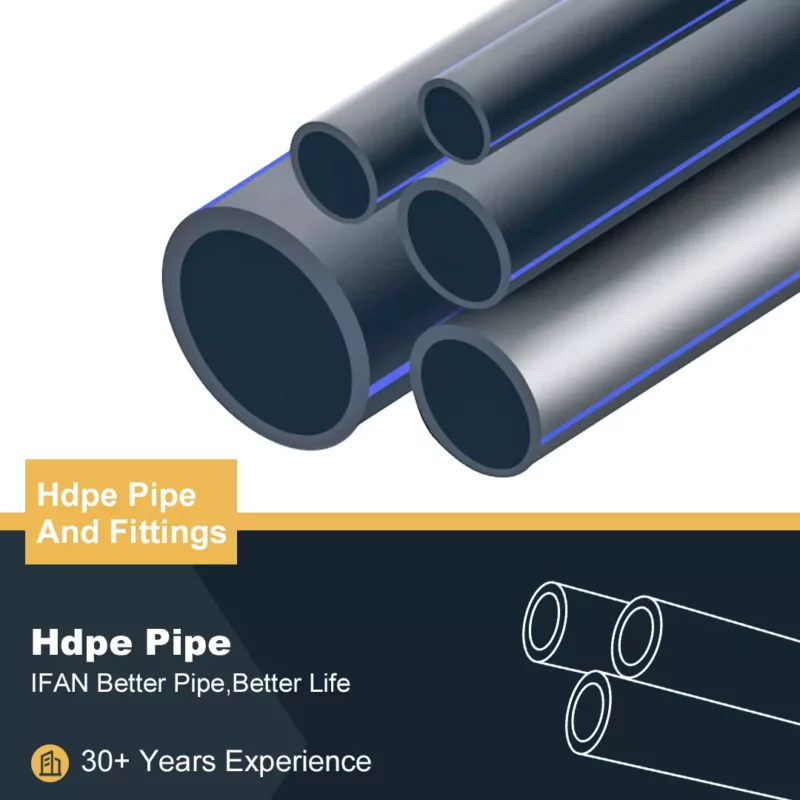
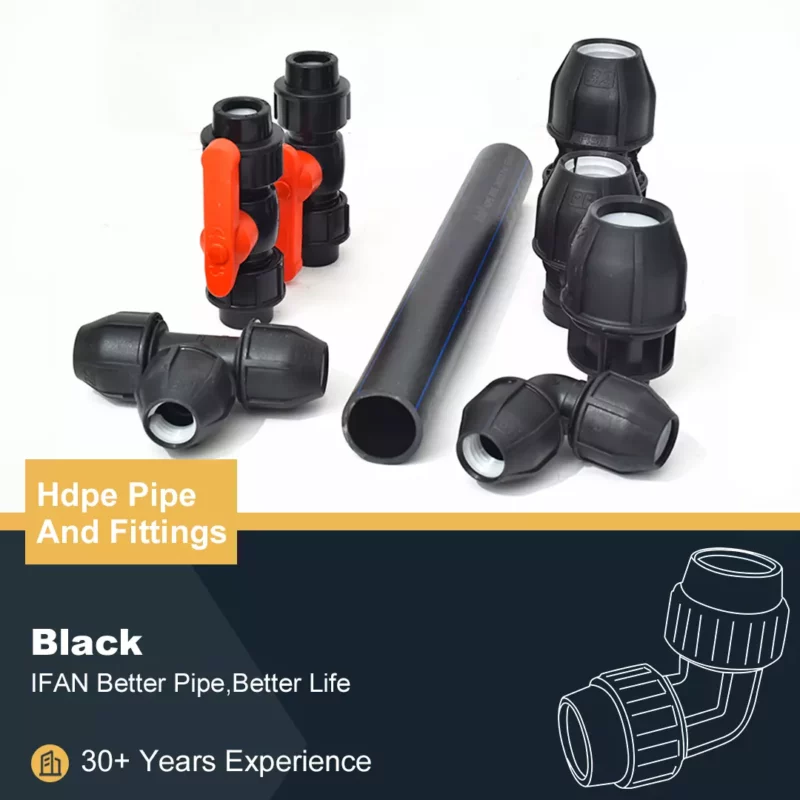
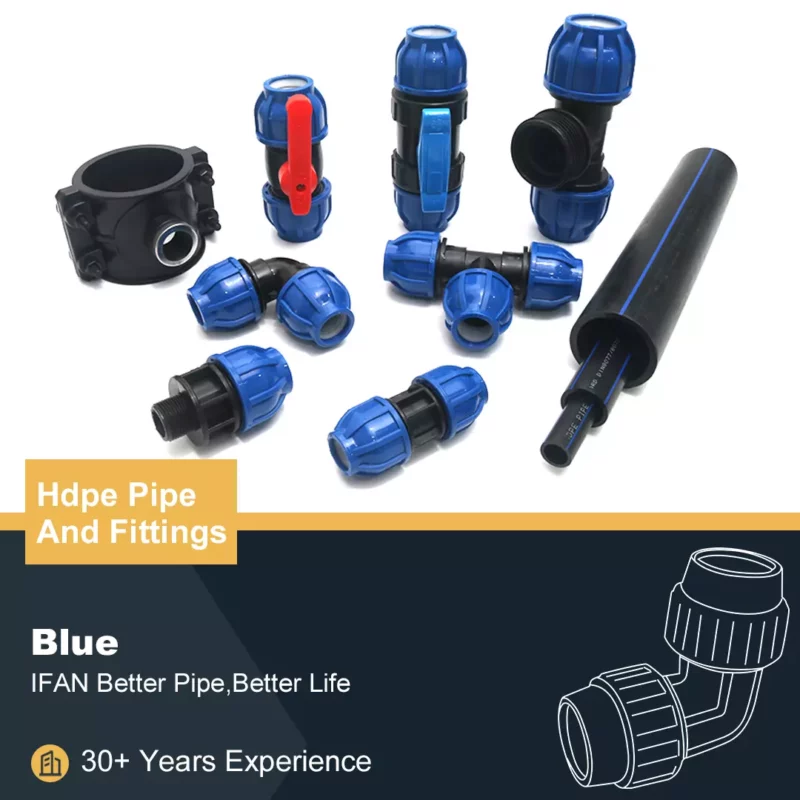
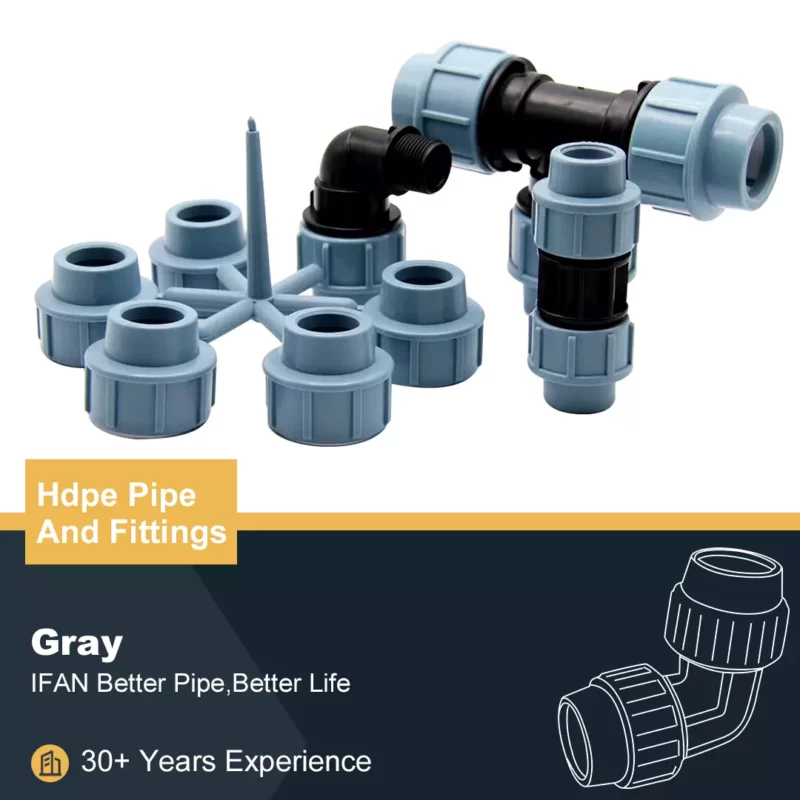

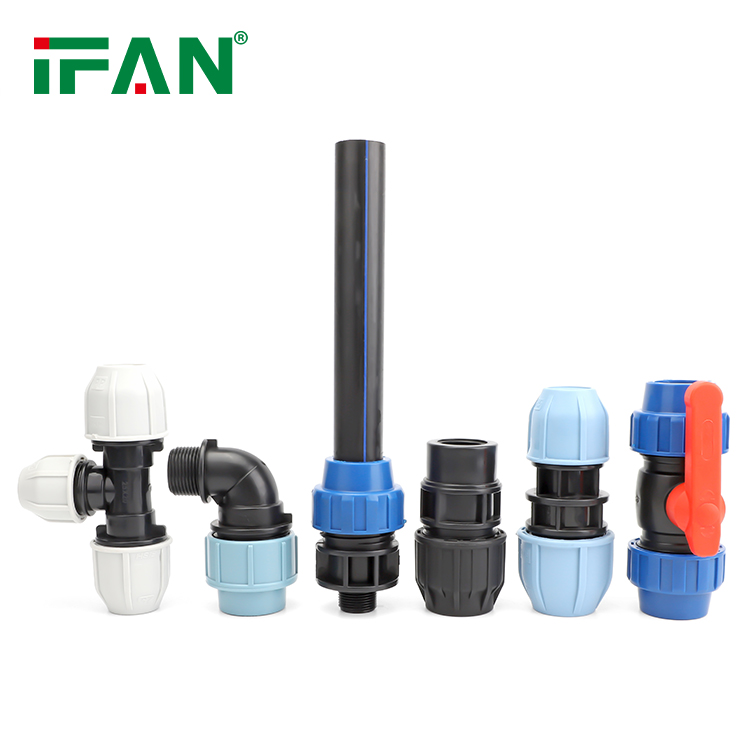
High-Density Polyethylene (HDPE) fittings are known for their exceptional performance in a wide range of applications. One of their standout features is their superior resistance to ultraviolet (UV) radiation. Exposure to UV rays can cause significant damage to many materials over time, leading to brittleness, cracking, and eventual failure. HDPE fittings, however, are designed to withstand UV degradation, making them an ideal choice for outdoor and exposed installations. This article explores the UV resistance of HDPE fittings and how this property enhances their longevity and performance.
What Makes HDPE Fittings UV-Resistant?
HDPE is a durable thermoplastic polymer with a molecular structure that naturally resists UV radiation. Unlike many other materials, HDPE does not degrade when exposed to sunlight, maintaining its strength and flexibility even after prolonged exposure. The material’s resistance to UV rays is enhanced by the addition of stabilizers during the manufacturing process, which further protect the fittings from UV-induced damage.
The inherent UV resistance of HDPE fittings ensures that they will continue to perform effectively in outdoor environments, where exposure to direct sunlight is constant. This property makes them a preferred choice for a variety of applications where UV degradation would compromise the reliability of other materials.
The Importance of UV Resistance in Outdoor Installations
In outdoor environments, materials are constantly exposed to sunlight. Over time, UV radiation can cause significant damage to materials that are not resistant, leading to failures, leaks, and costly repairs. For piping systems and other outdoor infrastructure, UV resistance is essential to ensure that the components remain durable and functional.
HDPE fittings are designed to withstand the damaging effects of UV rays, preventing premature aging, cracking, or loss of strength. This makes them ideal for use in applications such as irrigation systems, water distribution, gas pipelines, and sewage systems, where they are regularly exposed to the sun. The UV resistance of HDPE fittings ensures a long service life, reducing maintenance and replacement costs over time.
Longevity and Durability in Harsh Conditions
The UV resistance of HDPE fitting significantly extends their lifespan. In many outdoor applications, HDPE fitting can last for decades without showing signs of degradation from sunlight exposure. This longevity is due to the material’s ability to retain its structural integrity even under harsh environmental conditions.
Whether exposed to high temperatures, intense sunlight, or fluctuating weather, HDPE fitting maintain their strength and flexibility. This durability is a key reason why HDPE fitting are often chosen for long-term projects, where reliability and minimal maintenance are critical. The superior UV resistance ensures that these fittings will continue to perform efficiently, even in the most demanding environments.
HDPE Fittings vs. Other Materials in UV Exposure
When compared to other materials, HDPE fitting outperform many in terms of UV resistance. For example, metal fittings can suffer from rust, corrosion, and degradation when exposed to UV radiation. Similarly, PVC fittings, while resistant to UV to some degree, can become brittle and crack over time when exposed to direct sunlight.
In contrast, HDPE fitting maintain their structural integrity and flexibility, even after years of sun exposure. This resistance to UV radiation allows HDPE fitting to remain functional without requiring frequent replacements or repairs, making them a more cost-effective and reliable solution for outdoor installations.
Applications That Benefit from UV Resistance
The superior UV resistance of HDPE fitting makes them an ideal choice for a wide range of applications. In irrigation systems, HDPE fittings are often exposed to direct sunlight for long periods, making their UV resistance crucial for preventing damage. Similarly, in water distribution networks, HDPE fitting provide a reliable solution for outdoor piping that is constantly exposed to the sun.
Additionally, HDPE fitting are used in gas pipelines, sewage systems, and industrial applications, where UV exposure can weaken other materials. The ability of HDPE fitting to resist UV radiation ensures that these systems remain operational without the need for frequent maintenance, reducing operational costs and increasing efficiency.
Cost-Effectiveness of UV-Resistant HDPE Fittings
While HDPE fitting may have a higher initial cost than some other materials, their UV resistance makes them a cost-effective option in the long run. The durability and longevity of HDPE fitting mean that they require less frequent replacement, which translates into significant savings over time. Moreover, the resistance to UV degradation reduces the need for maintenance, further lowering operational costs.
For industries that rely on outdoor piping systems. Such as agriculture, water treatment, and construction, investing in UV-resistant HDPE fittings can result in long-term savings. The fittings’ resistance to UV radiation ensures that systems remain functional and reliable, even in harsh outdoor conditions.
Enhanced Sustainability and Environmental Benefits
The UV resistance of HDPE fitting also contributes to their sustainability. As a recyclable material, HDPE can be reprocessed and repurposed at the end of its lifecycle. This reduces the environmental impact associated with the disposal of used fittings. Additionally, the long service life of HDPE fitting means that fewer replacements are needed. Which helps to reduce waste and conserve resources.
By choosing UV-resistant HDPE fitting. Industries can not only benefit from their durability and performance but also contribute to more sustainable infrastructure. The reduced need for replacements and maintenance aligns with environmental goals. Making HDPE a more eco-friendly option compared to other materials that may require frequent replacement.
HDPE Fittings in Extreme UV Environments
In regions with intense sunlight or high-altitude locations, where UV exposure is more severe, HDPE fittings offer exceptional protection. In these environments, traditional materials may deteriorate quickly, leading to system failures and costly repairs. HDPE fittings, on the other hand, provide a robust solution that can withstand even the harshest UV conditions.
Whether installed in deserts, high-altitude locations, or areas with minimal cloud cover. HDPE fittings remain resilient and continue to perform without degradation. The ability to endure extreme UV radiation is a critical feature that makes HDPE fittings suitable for a wide range of challenging applications.
The Future of UV-Resistant HDPE Fittings
As industries continue to focus on sustainable and long-lasting infrastructure, the demand for UV-resistant HDPE fittings is expected to grow. Advances in material technology and manufacturing processes will likely enhance the properties of HDPE fittings, further improving their UV resistance and overall performance.
With increasing global awareness of environmental sustainability. HDPE fittings’ recyclability and durability make them an essential component of future infrastructure projects. As industries seek to reduce costs and improve efficiency. The use of UV-resistant HDPE fittings will continue to play a crucial role in modern piping systems.
Conclusion
HDPE fittings offer superior UV resistance, making them an ideal choice for a wide range of outdoor applications. Their ability to withstand prolonged exposure to sunlight without degrading ensures that they remain durable and reliable in harsh environmental conditions. Whether used in water distribution, gas pipelines, irrigation systems, or industrial applications, HDPE fittings provide long-term performance and cost savings.
By investing in UV-resistant HDPE fittings, industries can reduce maintenance costs, extend the lifespan of their systems, and contribute to more sustainable infrastructure. As demand for durable and eco-friendly solutions increases, HDPE fittings will continue to be a key component in building resilient, long-lasting infrastructure for the future.
If you have read this article and have any questions, please feel free to contact IFAN. Below is our contact information:
Whatsapp:+86 13373827623
Email:[email protected]