

There’s a fundamental misunderstanding circulating through job sites and plumbing supply houses that deserves immediate clarification. The phrase “Milwaukee PEX Press Fitting Tools with PEX Crimp Jaws” describes something that cannot and does not exist. This isn’t merely semantics—it’s about understanding two completely different plumbing technologies that, if confused, can lead to system failures, voided warranties, and costly water damage.
For professionals investing in Milwaukee’s M18 Press Tool system, understanding why press jaws and crimp jaws are incompatible isn’t just technical knowledge—it’s essential for protecting your reputation and delivering reliable work.
Two Technologies, Two Tools: The Fundamental Divide
To understand why Milwaukee doesn’t make “PEX crimp jaws” for their press tools, you need to grasp the mechanical difference between these connection methods.
PEX Press Fittings: The Engineered Seal
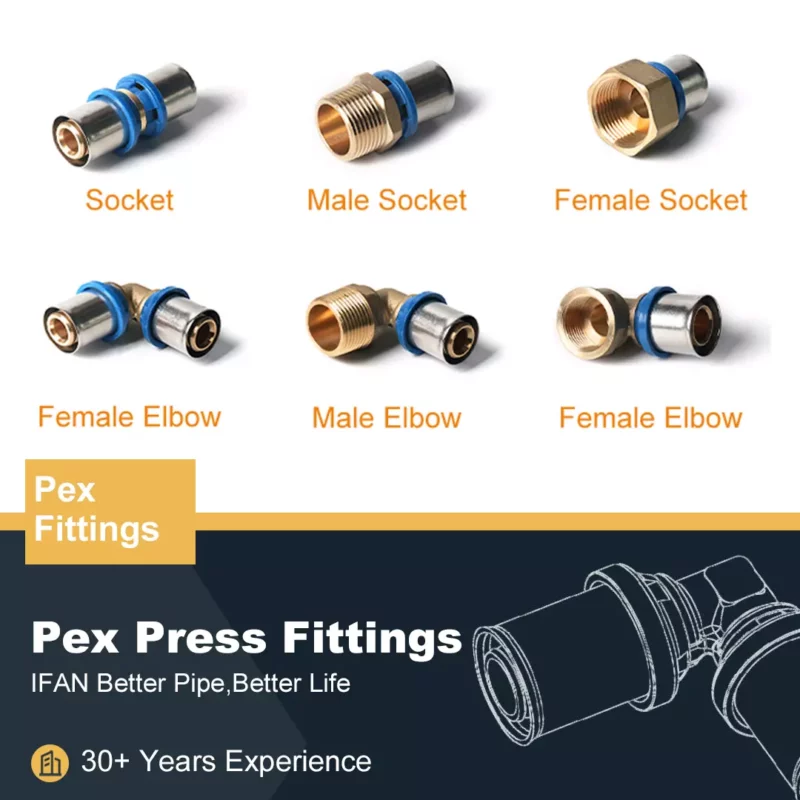
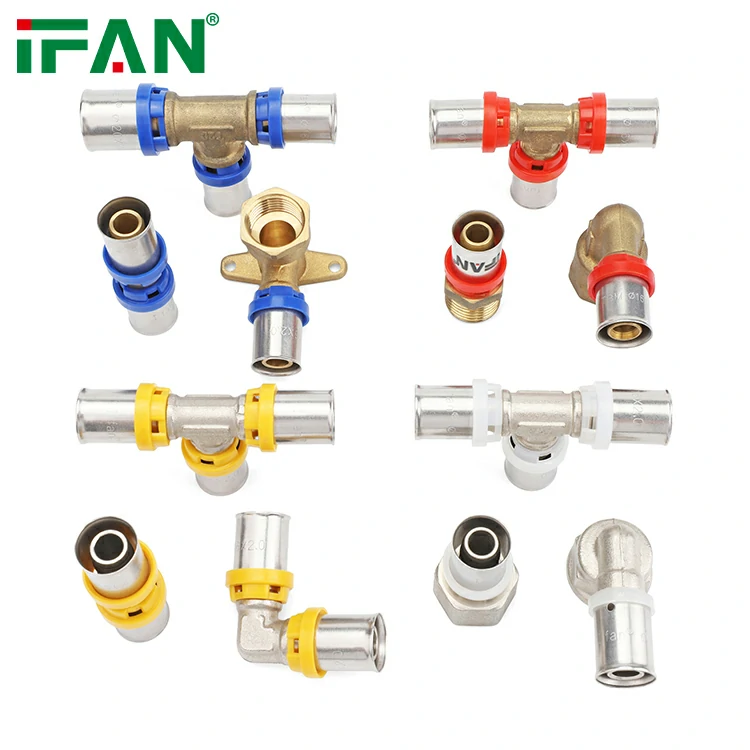
A PEX press fitting is a complete, self-contained sealing system. It consists of:
- A brass fitting body with machined water pathways
- A factory-installed EPDM O-ring seated in a precision groove
- A loose stainless steel sleeve that slides over the assembly
When you use a Milwaukee press tool with the correct jaws, it hydraulically compresses this sleeve around the fitting and PEX tubing. This action simultaneously creates a mechanical grip and compresses the O-ring to form a watertight seal. The system provides multiple verifications: the tool clicks and shows a green light, and many fittings have inspection windows for visual confirmation.
PEX Crimp Systems: The Friction Fit
Crimp systems operate on a completely different principle:
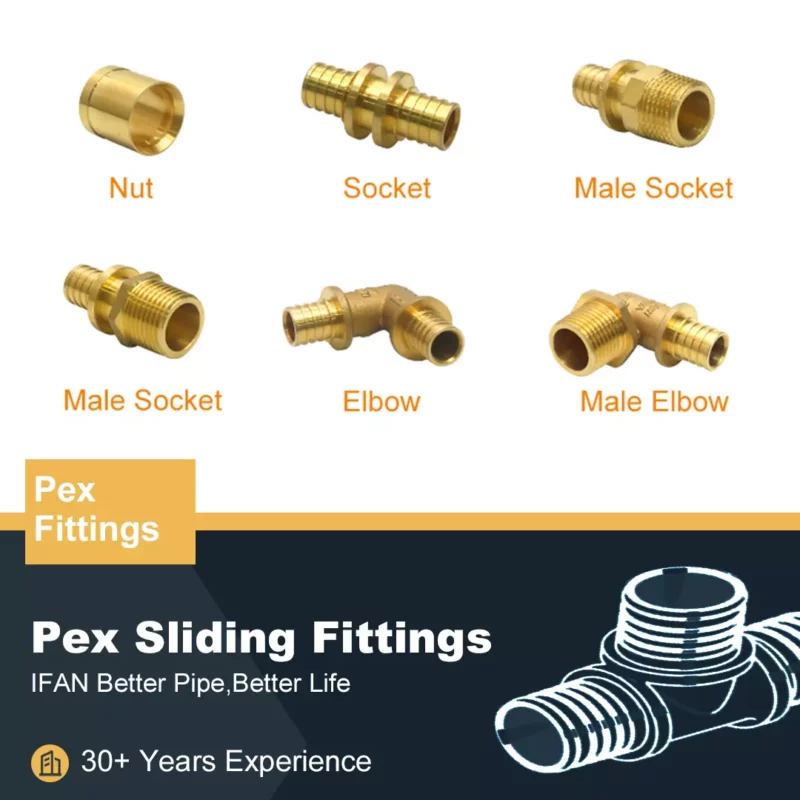
- A simple barbed fitting (brass or plastic) without O-rings
- A separate copper crimp ring placed over the PEX tubing
- A mechanical crimp tool that squeezes the ring around the barbed fitting
The seal relies entirely on the mechanical compression of the PEX between the crimp ring and the barbs. There’s no secondary sealing mechanism, and the connection depends on maintaining constant compression force.
The Milwaukee Ecosystem: Precision Engineering, Not Adaptation
Milwaukee’s press tool system represents a closed, precision-engineered ecosystem. The company designs their tools, jaws, and PEX press fittings to work together as a system. This isn’t about proprietary lock-in—it’s about ensuring reliability through controlled compatibility.
The Jaw Design Specificity
Milwaukee press jaws are precisely machined to match the outer diameter and compression requirements of specific manufacturers’ PEX press fittings. A jaw designed for Viega fittings has a different internal profile than one for Uponor fittings because the sleeve dimensions and compression requirements differ.
Crimp rings, by contrast, require a simple mechanical compression that bears no relationship to the calibrated hydraulic pressing action needed for PEX press fittings.
The Tool Operation Difference
The Milwaukee M18 Press Tool uses hydraulic pressure to achieve consistent force application. It’s programmed to deliver the exact pressure needed for a proper press, with electronic verification of completion.
Crimp tools are purely mechanical—either hand-operated scissor tools or battery-powered mechanical crimpers that simply squeeze with fixed mechanical advantage.
The Consequences of Confusion: What Happens When Systems Mix
Imagine a contractor, new to press technology, tries to use their Milwaukee press tool to compress a crimp ring onto a barbed fitting. The results would be catastrophic:
- Insufficient Compression: The press tool jaws wouldn’t properly engage the soft copper crimp ring, likely resulting in an oval or incomplete compression that fails to seal.
- Damaged Components: The excessive force of the press tool could easily crush the barbed fitting or damage the PEX tubing underneath the ring.
- Immediate Failure: The connection would likely leak immediately upon pressurization, as there’s no O-ring to compensate for an imperfect mechanical seal.
Conversely, trying to use crimp jaws on a PEX press fitting is physically impossible—the crimp tool cannot open wide enough to fit over the press fitting’s sleeve.
The Milwaukee Solution: Right Tool for the Right Job
Milwaukee offers solutions for both technologies, but as separate, purpose-built systems:
For PEX Press Fittings:
- Milwaukee M18 Force Logic Press Tool
- Manufacturer-specific jaw sets (Viega, Uponor, etc.)
- PEX press fittings from various manufacturers
For PEX Crimp Systems:
- Milwaukee M12 or M18 Crimp Tools
- Standard crimp jaws that work with all crimp rings
- Barbed fittings and copper crimp rings
Professional plumbers often maintain both systems, using each where appropriate. PEX press fittings typically serve for permanent behind-the-wall installations where verification and long-term reliability are paramount. Crimp systems might be used for temporary installations or applications where cost is the primary concern.
Making the Right Choice: Guidance for Professionals
When deciding between these systems for your Milwaukee tools, consider:
Application Criticality
For permanent plumbing that will be enclosed in walls, PEX press fittings provide the verification and reliability that justify their higher cost. The multiple confirmation methods (tool feedback, inspection windows) provide peace of mind before closing up walls.
Project Economics
While PEX press fittings have higher material costs, the labor savings from faster installation and reduced callbacks often make them more economical for large projects. Crimp systems may be more cost-effective for small jobs or temporary installations.
Tool Investment
The Milwaukee M18 Press Tool represents a significant investment ($1,200-$1,500 with jaws), while their crimp tools are more affordable ($300-$500). Consider your volume of work and the types of projects you typically handle.
The Professional Standard
In the plumbing trade, precise language matters. Abandoning the misleading term “PEX crimp jaws for press tools” is more than technical correctness—it’s a mark of professional understanding.
The Milwaukee press tool system represents the gold standard for PEX press fitting installation because it combines power, precision, and verification in a way that ensures reliable, long-lasting connections. But it only works when used as designed—with the correct PEX press fittings and manufacturer-specific jaws.
For professionals committed to quality work, understanding this distinction isn’t optional—it’s essential. Your Milwaukee tools are investments in reliability, but only when paired with the correct components and used according to their design specifications.
Frequently Asked Questions (FAQ)
1. Can I use Milwaukee press jaws with any brand of PEX press fittings?
No, you must use jaws specifically designed for the brand of PEX press fittings you’re installing. Viega jaws only work with Viega fittings, Uponor jaws with Uponor fittings, etc. The jaw profiles are manufacturer-specific to ensure proper compression.
2. What happens if I accidentally try to press a crimp ring with my Milwaukee press tool?
The tool may complete its cycle, but the connection will fail. The press jaws aren’t designed for crimp rings, resulting in improper compression. You’ll need to cut out the failed connection and replace all components.
3. Are there any adapters that allow press tools to work with crimp systems?
No, and for good reason. The technologies are fundamentally incompatible. Attempting to adapt one to the other would compromise the reliability that both systems are designed to provide.
4. How do I identify PEX press fittings versus crimp fittings?
PEX press fittings have a distinctive stainless steel sleeve already in place. Crimp fittings are simple barbed fittings without sleeves, used with separate crimp rings. The packaging will also clearly identify the fitting type.
5. Can I use the same PEX tubing for both press and crimp systems?
Generally yes, most PEX-b tubing works with both systems. However, always verify compatibility with the specific fitting manufacturer’s requirements, as some may have preferences for PEX type or brand.