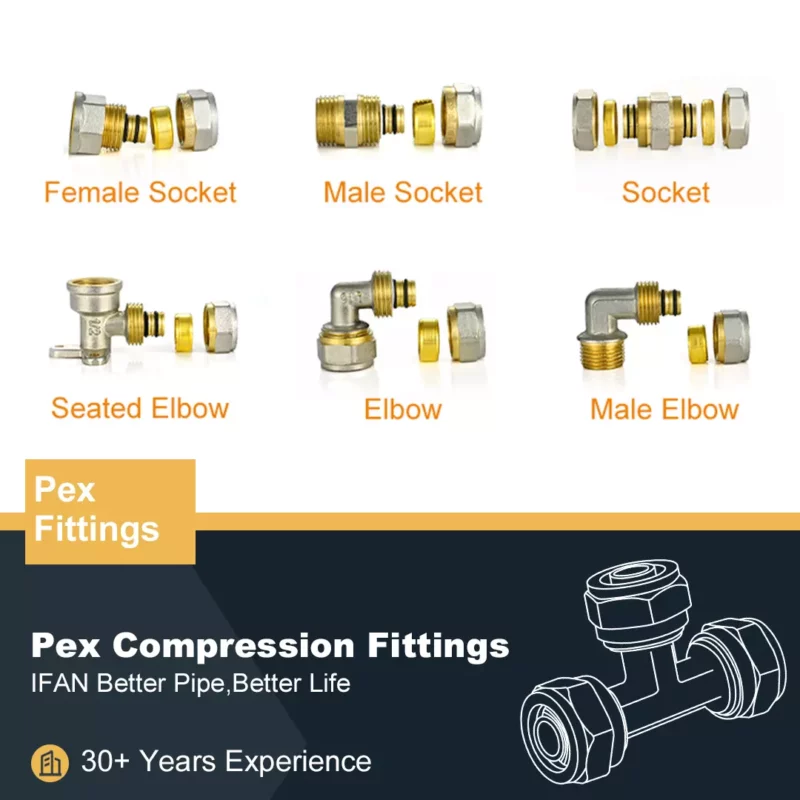
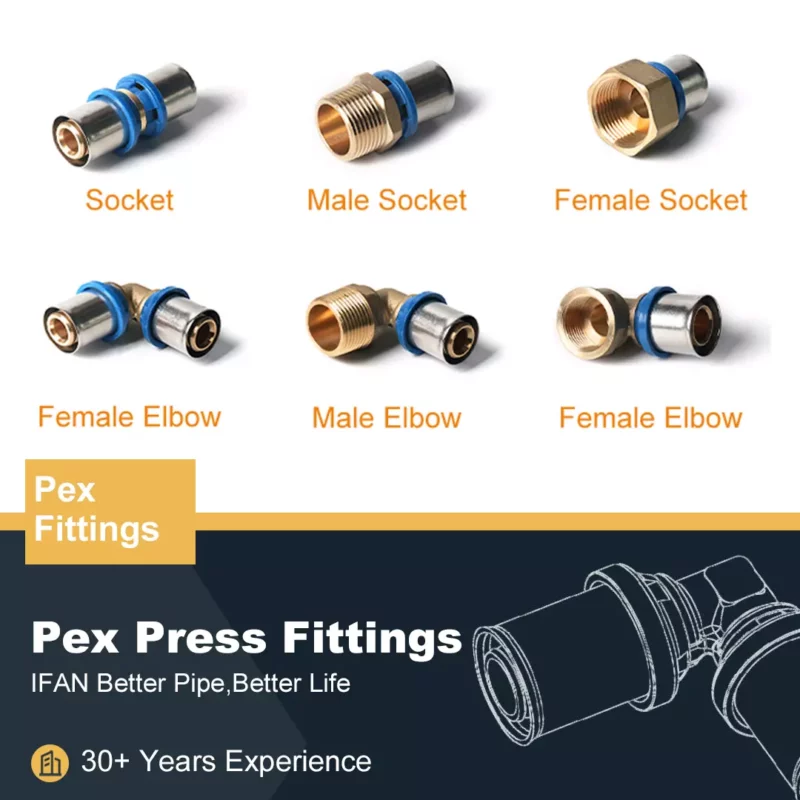
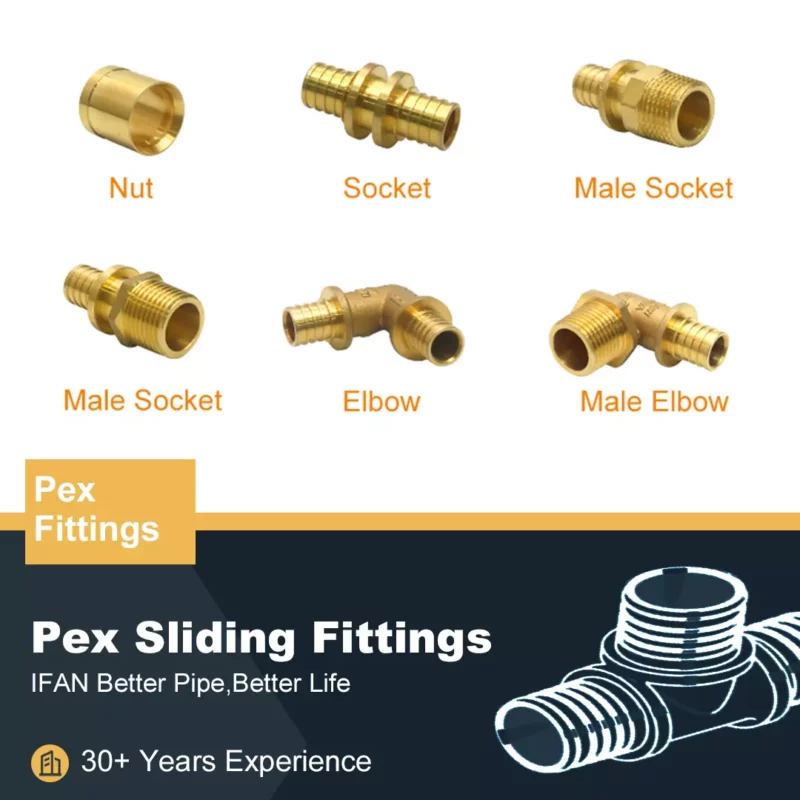



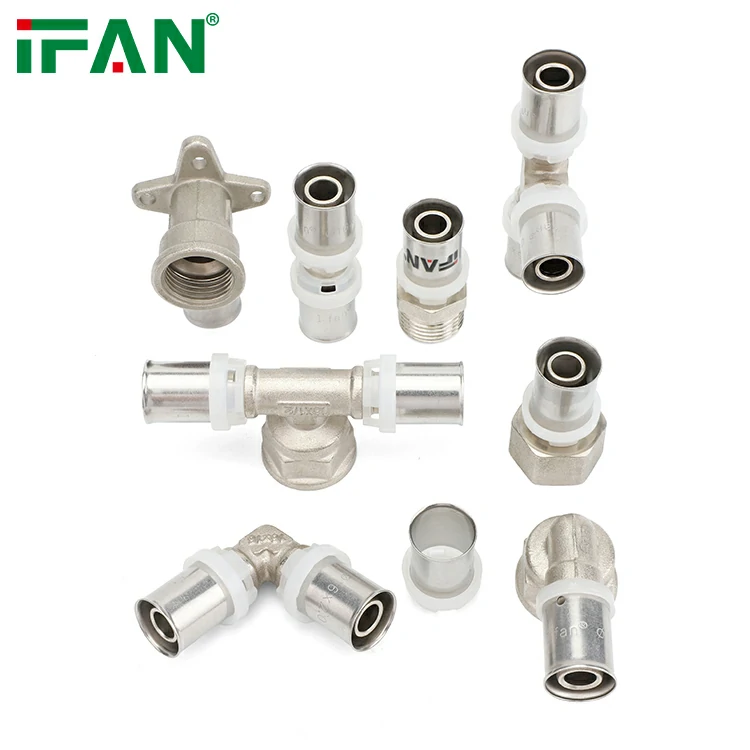
There’s a moment after the last press is complete, when the water is turned on and the system pressurizes, that a plumber’s ear is trained not for leaks, but for sound. A faint hum, a persistent rattle—the telltale signs of vibration traveling through the pipes. While a PEX press fitting creates a perfect seal, it doesn’t magically eliminate the physics of water hammer and pump resonance. This is where the supporting cast becomes critical. Navigator’s launch of a new range of rubber-lined pipeline clamps isn’t a headline-grabber, but for those who understand system integrity, it’s a welcome solution to a pervasive problem.
This isn’t just about holding pipes in place. It’s about holding them correctly, ensuring that the durability built into the PEX press fitting isn’t undermined by the hardware meant to support it.
The Hidden Stress on a Pressurized System
A modern plumbing system is a dynamic environment. Circulating pumps, solenoid valves on dishwashers, and the sudden stopping of water flow (water hammer) all create kinetic energy. This energy travels through the water and the pipe walls as vibration and shockwaves.
With rigid, metal-lined clamps, this energy has nowhere to go. The pipe is held tightly against an unyielding surface. The result is noise—a persistent rattling that can drive homeowners to distraction. More insidiously, this constant vibration and abrasion can, over years, cause stress fatigue. While the PEX press fitting itself is immensely robust, the constant micro-movements can transfer stress to the connection points and fittings.
The Navigator Solution: Isolation as a Principle
Navigator’s new clamps are designed around the principle of isolation, not just restraint. The rubber lining is the key. It’s not a thin spray-on coating, but a thick, vulcanized sleeve permanently bonded to the galvanized steel clamp. This creates a cradle that does two things:
- Dampens Vibration: The rubber acts as a shock absorber. It dissipates the kinetic energy from water hammer and pump vibration, converting it into negligible amounts of heat. This eliminates the transmission of noise to the building’s structure—the wood joists, metal studs, and concrete walls that act as sounding boards.
- Protects the Pipe: PEX, while durable, can be susceptible to abrasion if it rubs continuously against a sharp metal edge. The smooth, resilient rubber lining completely encapsulates the pipe within the clamp, preventing any metal-to-plastic contact. This protects the pipe’s exterior and preserves its long-term integrity.
Why This Matters for a PEX Press Fitting System
The synergy between a robust clamping system and a PEX press fitting installation is profound. The press system is celebrated for its speed and reliability; these clamps ensure that this reliability is maintained for the life of the system.
- Preserving Connection Integrity: By absorbing vibration, the clamps prevent those forces from being transferred directly to the PEX press fitting. This reduces long-term stress on the mechanical seal, ensuring it remains stable and leak-free.
- A Professional Finish: A silent plumbing system is a mark of quality craftsmanship. Using vibration-dampening clamps is the final step in delivering a professional installation that is not just functional, but impeccably quiet.
- Code and Best Practice: Many modern plumbing codes and manufacturer installation guides explicitly recommend or require insulated supports for plastic piping to prevent abrasion and dampen noise. Navigator’s new line is a direct response to this evolving standard of care.
Beyond the Basics: The Thoughtful Design Details
Looking closer at the range, you see a product designed by people who understand the trade. The clamps are available in a full spectrum of sizes, ensuring a snug fit for various PEX diameters without over-tightening. The rubber lining is often slightly raised at the edges, creating a “cushion-lock” effect that further minimizes lateral movement. The galvanized steel provides corrosion resistance for damp environments like basements and mechanical rooms, while the one-piece design makes installation a simple, one-person task.
The Unseen Foundation of a Quality Install
In the end, the best PEX press fitting in the world is only as good as the system that supports it. You can have perfect, leak-free connections, but if the pipes are rattling in the walls, the installation is a failure in the eyes of the occupant.
Navigator’s launch of this rubber-lined range is a recognition that a plumbing system is an ecosystem. It’s an acknowledgement that the parts you don’t see—the clamps, the hangers, the supports—are not incidental. They are foundational. By choosing clamps designed for the specific challenges of modern PEX systems, installers are not just hanging pipe; they are ensuring the silence, longevity, and total quality that defines a truly professional job.
Frequently Asked Questions (FAQ)
1. Are these rubber-lined clamps necessary for every PEX installation?
While not always mandatory by code, they are considered a best practice for any installation where noise or vibration is a concern. This includes homes with recirculating pumps, near appliances, and in multi-family buildings where quiet operation is critical.
2. Can these clamps be used with other types of pipe?
Yes, they are excellent for any application requiring vibration dampening and abrasion protection. They are commonly used for CPVC, copper, and even small-diameter gas lines where protection from metal-to-metal contact is desired.
3. How do I select the correct clamp size for my PEX tubing?
The clamp size should correspond to the outer diameter of the PEX tubing. For example, for 1/2-inch PEX, which has an OD of about 5/8-inch, you would select a clamp sized for that diameter. A slightly snug fit is ideal, but the pipe should not be compressed.
4. Will the rubber lining degrade over time and leave a stain on the pipe?
High-quality, vulcanized EPDM or neoprene rubber linings are designed for long-term stability and are resistant to degradation from ozone, temperature, and moisture. They are non-marking and will not stain or react with the PEX material.
5. How far apart should I space these clamps when supporting horizontal pipe runs?
Spacing is typically dictated by local code, but a general rule for horizontal PEX runs is every 32 inches. Always check your local plumbing code and the PEX manufacturer’s installation guide for specific requirements, which may vary based on pipe size and temperature.
Whatsapp:+86 13373827623
Email:[email protected]