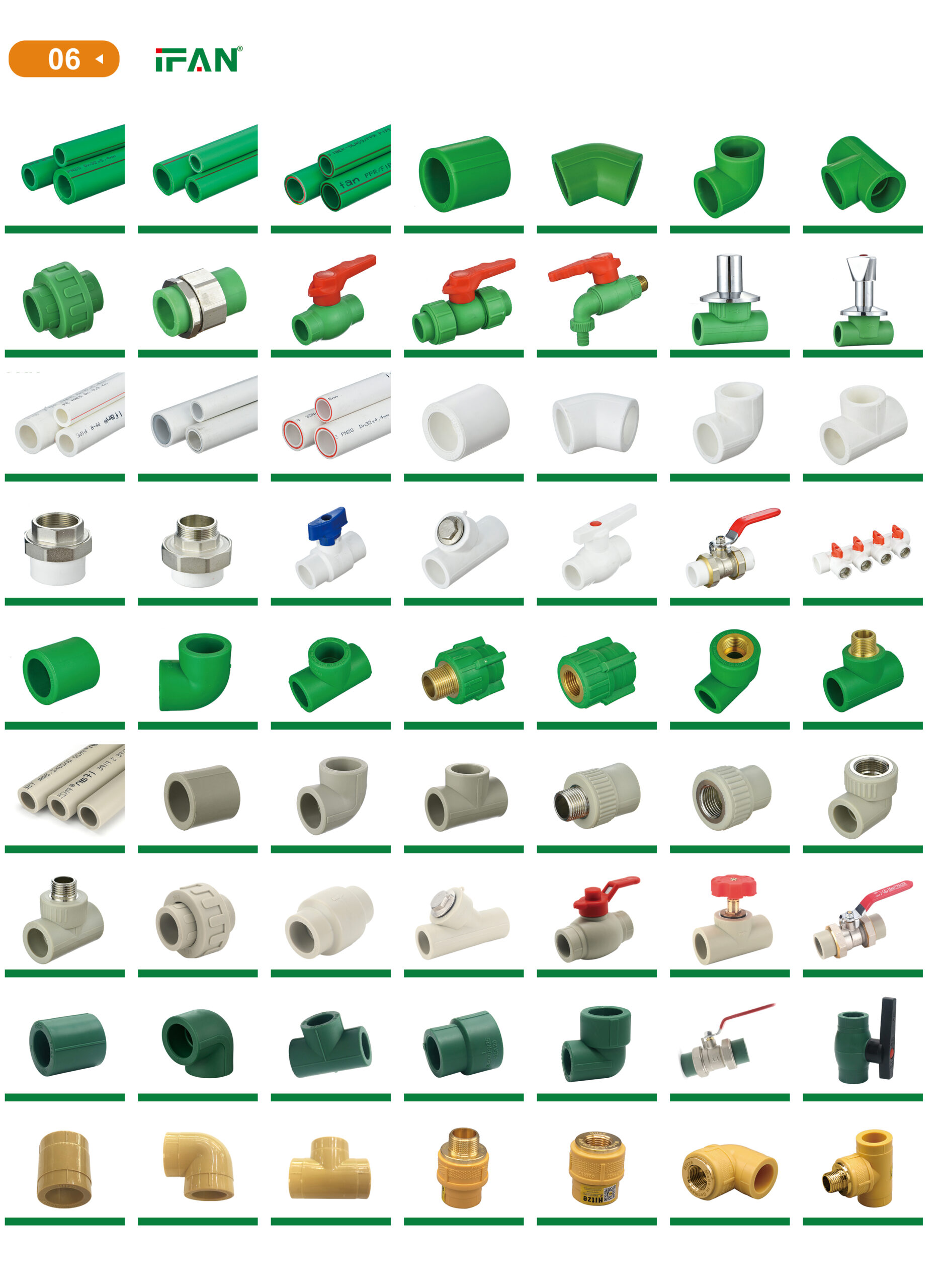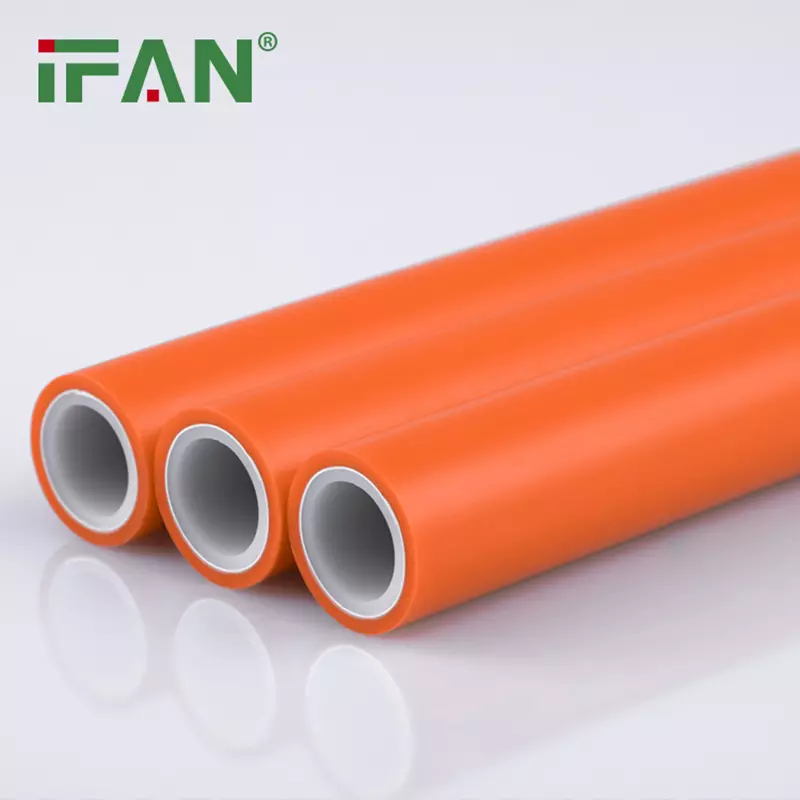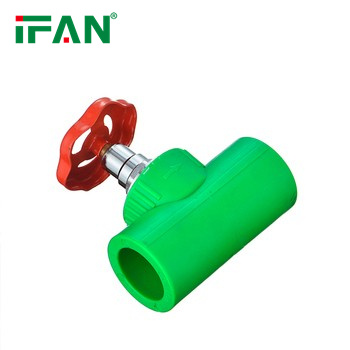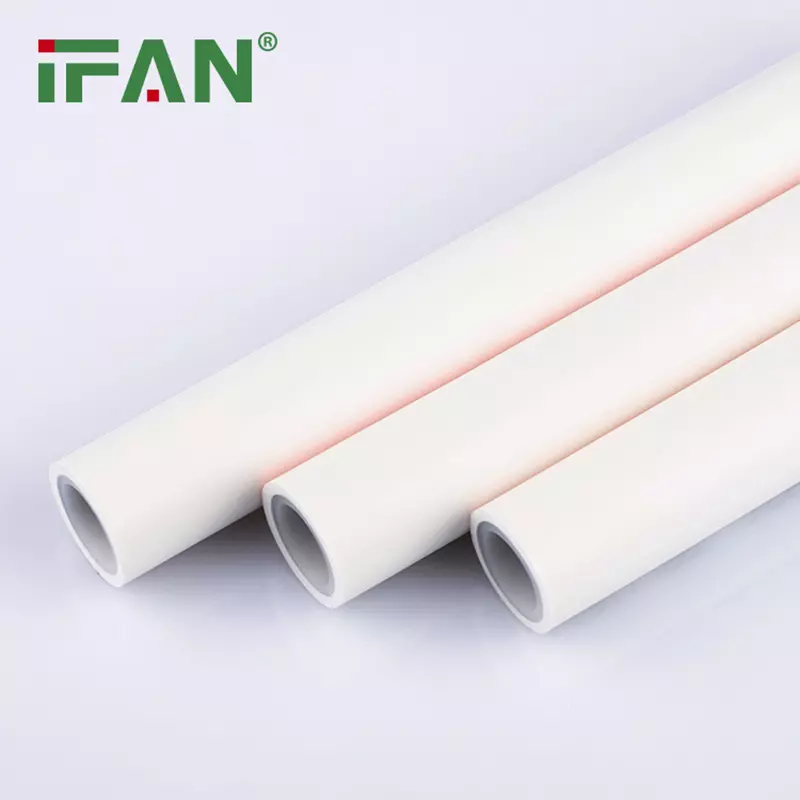
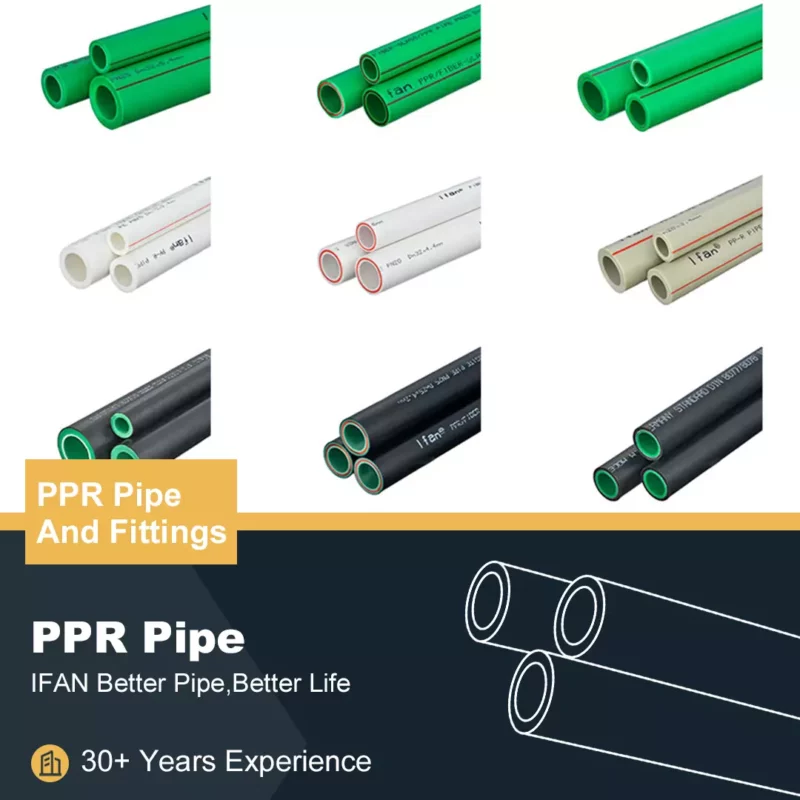
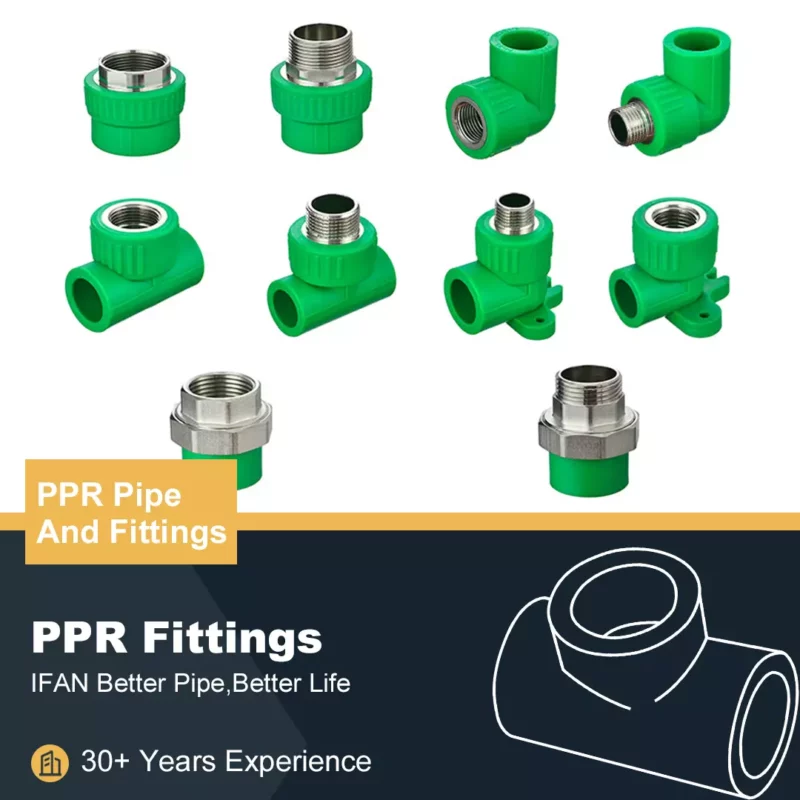
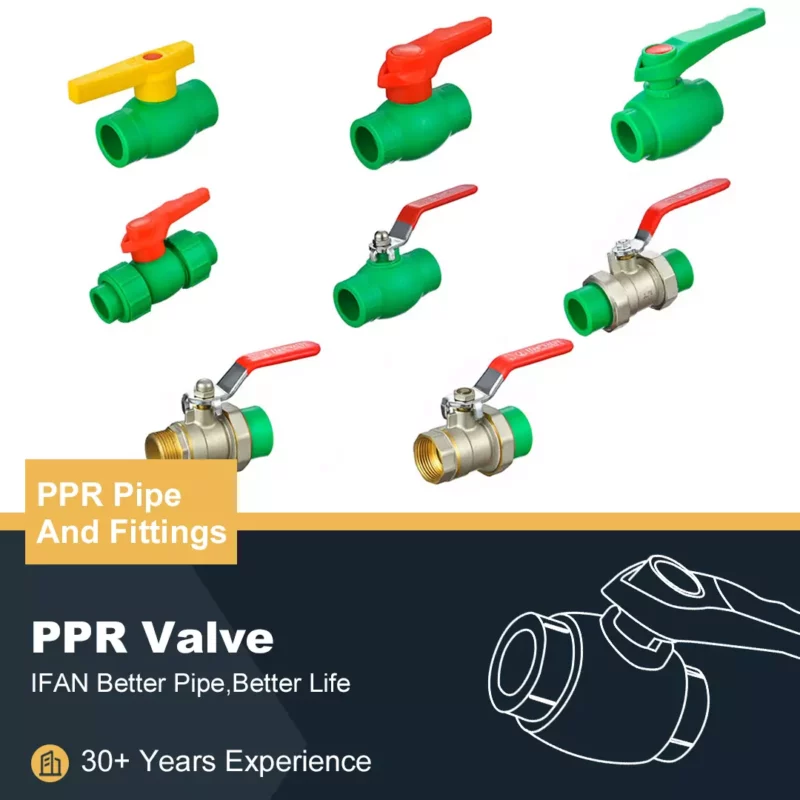
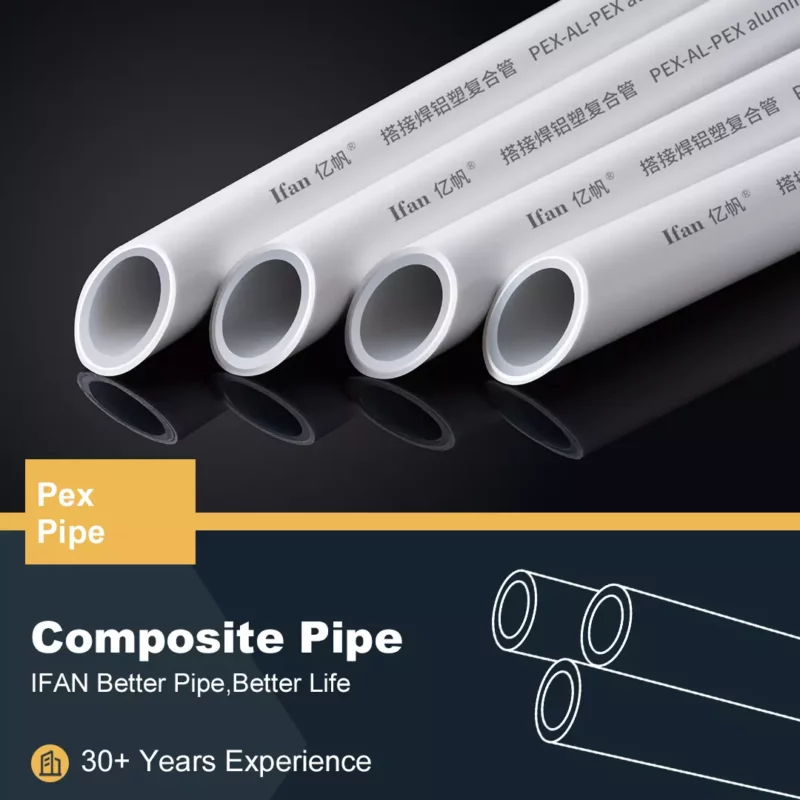
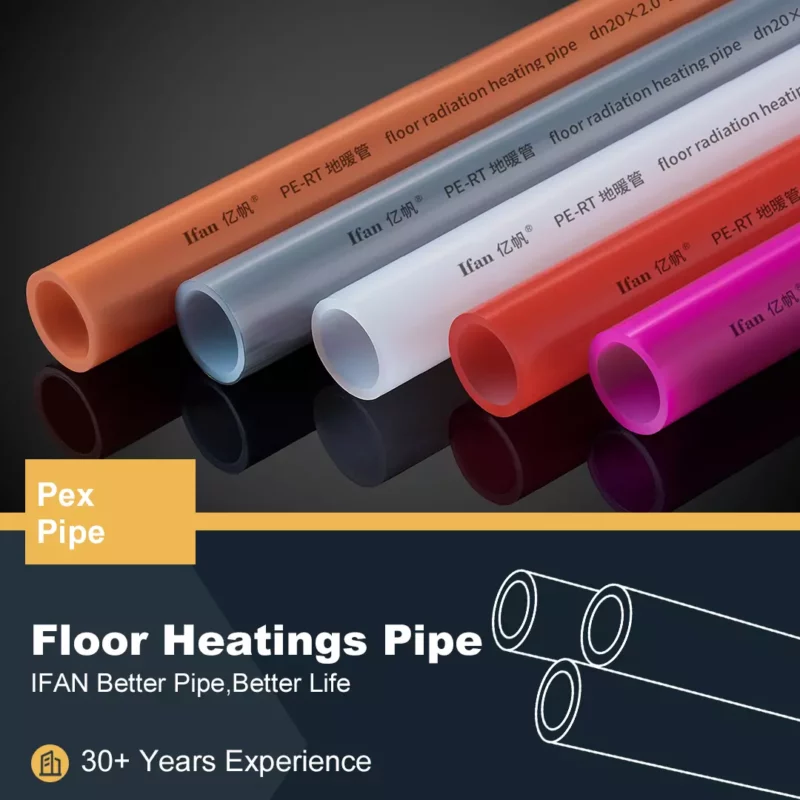




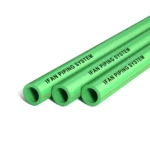
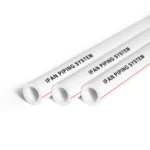
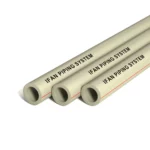
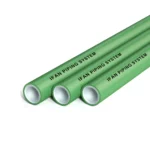
| Product Name | IFAN PPR Pipe |
| Color | Green,White,Grey,Black,Yellow Color Or Customized |
| Size | 20-160mm |
| Material | Polypropylene |
| Package | IFAN Woven Bag |
| OEM | Aviable |
| Sample | Free Provide |
| Contact US | Whatsapp:+8613373827623 E-mail:[email protected] |
PPR pipes are available in three primary types:
a. PPR-C Pipe:
Characterized by increased crystallinity, PPR-C pipes excel in high-temperature applications, making them ideal for hot water systems.
b. PPR-FB Pipe:
The fiberglass-reinforced PPR-FB pipes offer enhanced strength and durability, making them suitable for demanding industrial environments.
c. PPR-AL-PPR Pipe:
Featuring an aluminum layer, PPR-AL-PPR pipes provide excellent thermal insulation, rendering them perfect for both hot and cold water installations.
a. PPR-C Pipes in Hot Water Systems:
PPR-C pipes find widespread use in hot water distribution systems, ensuring efficient heat transfer and withstanding high temperatures.
b. PPR-FB Pipes in Industrial Settings:
PPR-FB pipes, with their reinforced structure, are employed in industrial settings where durability and resistance to harsh conditions are paramount.
c. PPR-AL-PPR Pipes for Thermal Insulation:
The aluminum layer in PPR-AL-PPR pipes makes them suitable for applications requiring thermal insulation, such as in central heating systems.
a. Corrosion Resistance:
PPR pipes boast excellent corrosion resistance, ensuring a longer lifespan compared to traditional metal pipes.
b. Chemical Inertness:
Their chemical inertness makes PPR pipes suitable for various applications, ensuring the purity of transported fluids.
c. Easy Installation:
The lightweight nature of PPR pipes simplifies installation, reducing labor costs and making them a preferred choice in construction projects.
a. Preparation:
Ensure clean, dry pipes and fittings. Cut them squarely to prevent irregularities in the fusion process.
b. Heating the Pipes and Fittings:
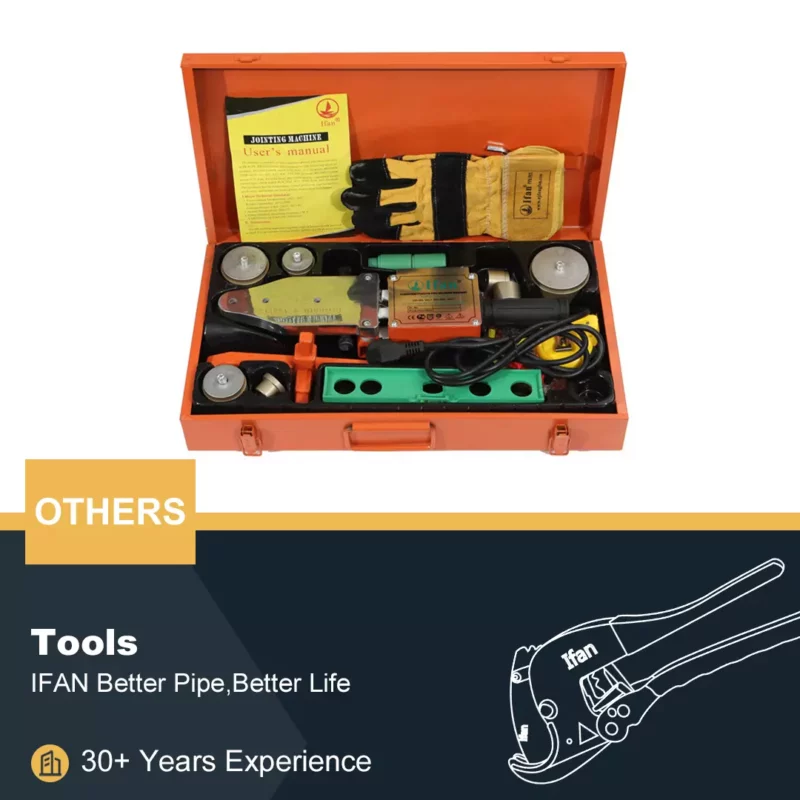
Use a PPR pipe welding machine to heat both the pipe and fitting evenly until the material reaches the fusion temperature.
c. Fusion and Cooling:
Quickly join the heated pipe and fitting, applying pressure to achieve a seamless fusion. Allow the joint to cool and solidify.