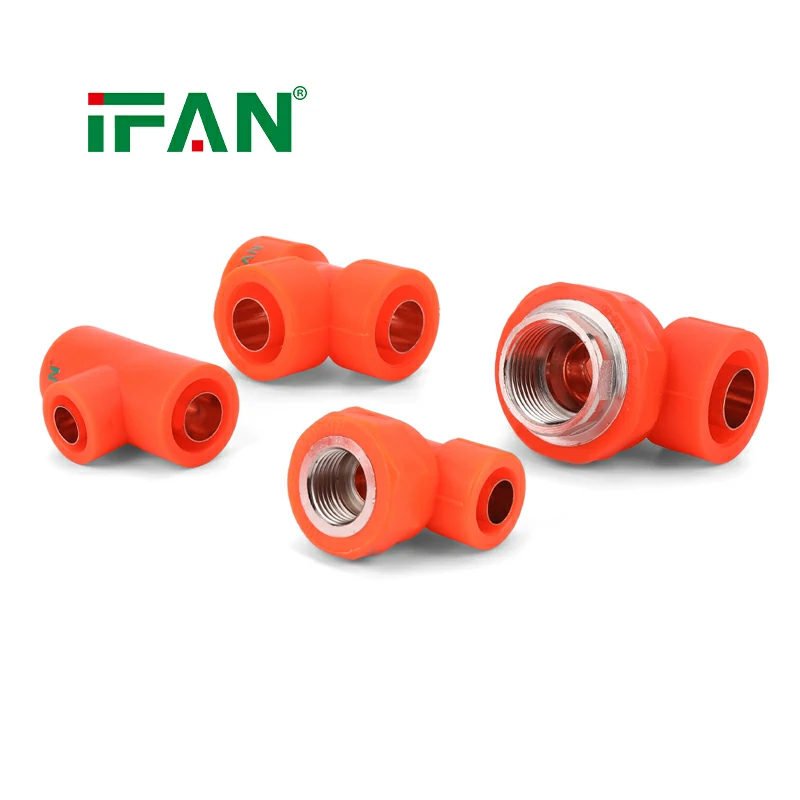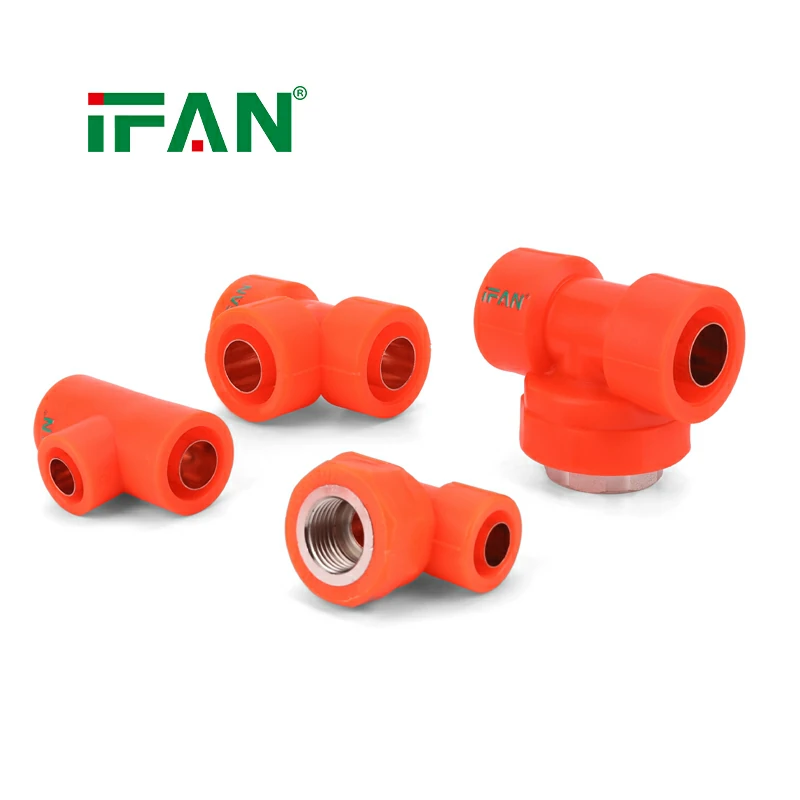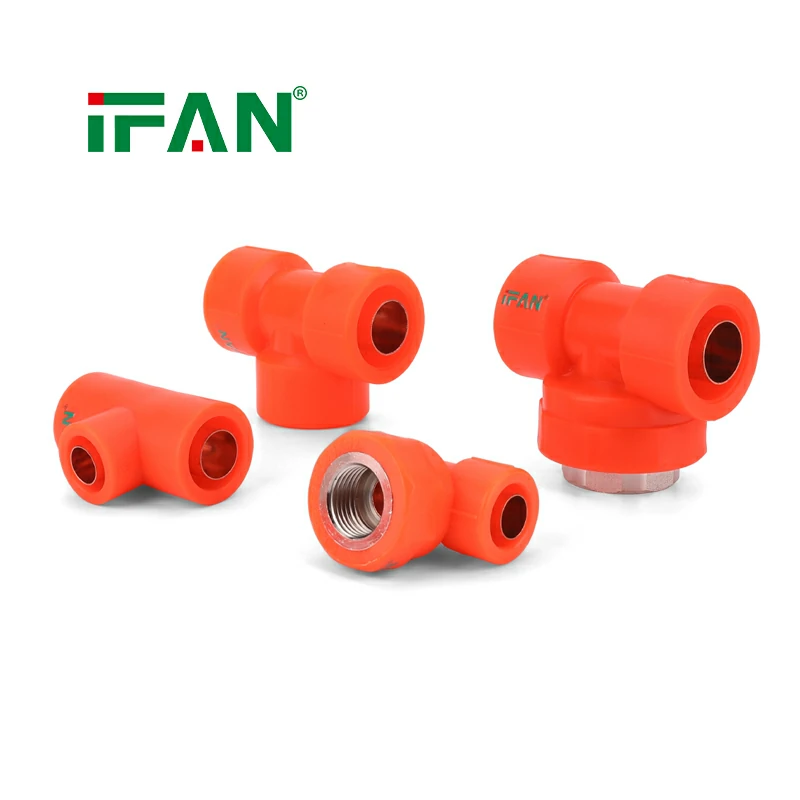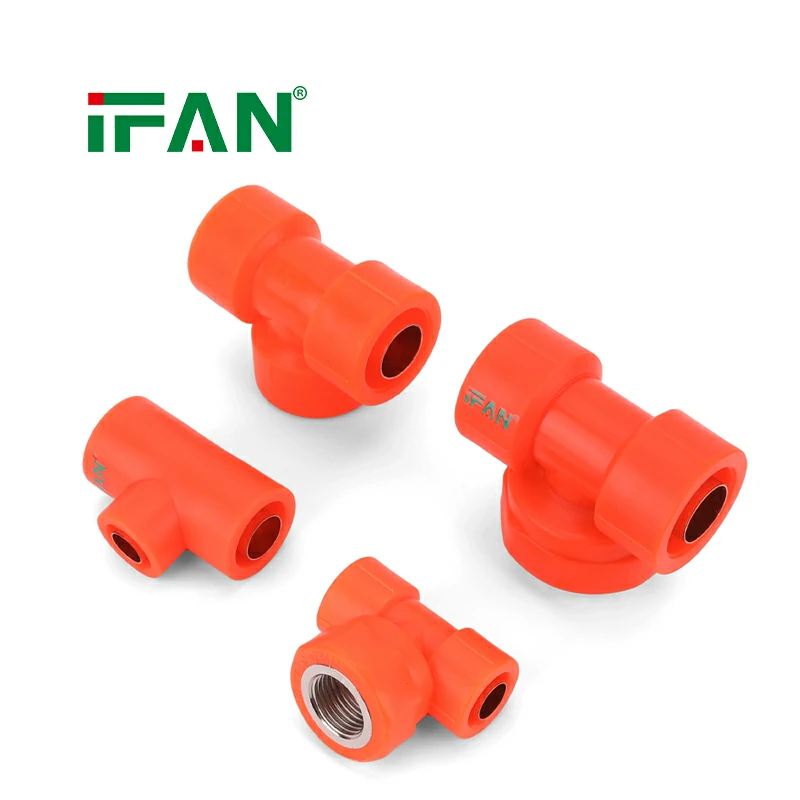


Let’s clear something up right from the start. The title above describes something that doesn’t exist in any legitimate plumbing system. You cannot, and should never try to, connect a PEX press fitting to a stainless-steel clamp. They are two fundamentally different, incompatible technologies designed for entirely separate connection methods. This isn’t a matter of preference; it’s a matter of physics and engineering.
Perhaps you’ve heard these terms used loosely on a job site, or seen both products in the same supply aisle. But confusing them is like trying to use a socket wrench on a nail. Let’s break down why these systems are worlds apart and how understanding this distinction is crucial for doing quality, code-compliant work.
A Tale of Two Systems: Understanding the Mechanics
To see why a press fitting and a clamp cannot connect, you have to understand what each one does.
The Stainless-Steel Clamp (for Crimp PEX):
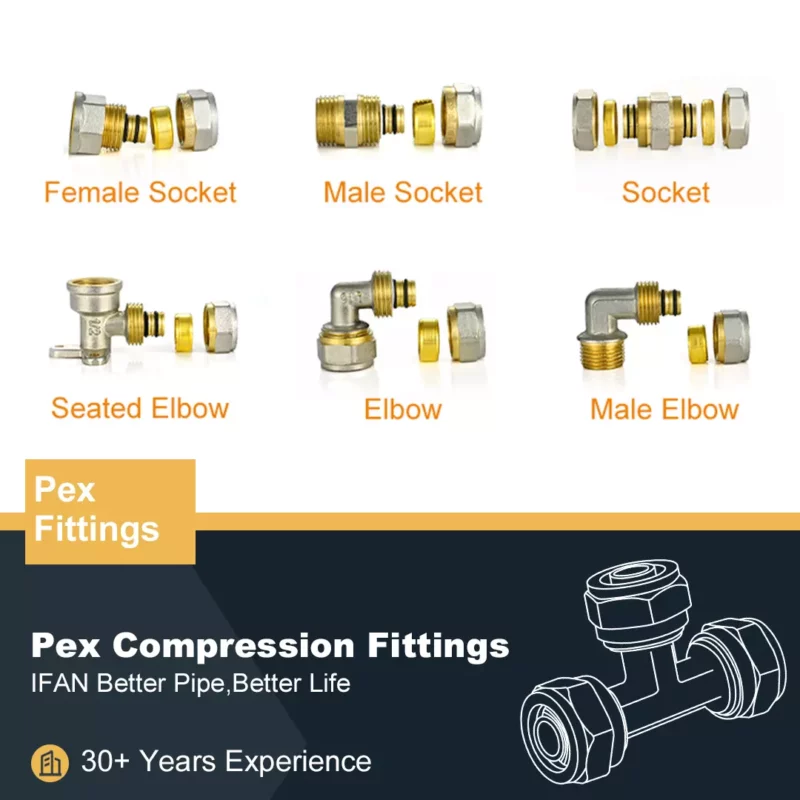
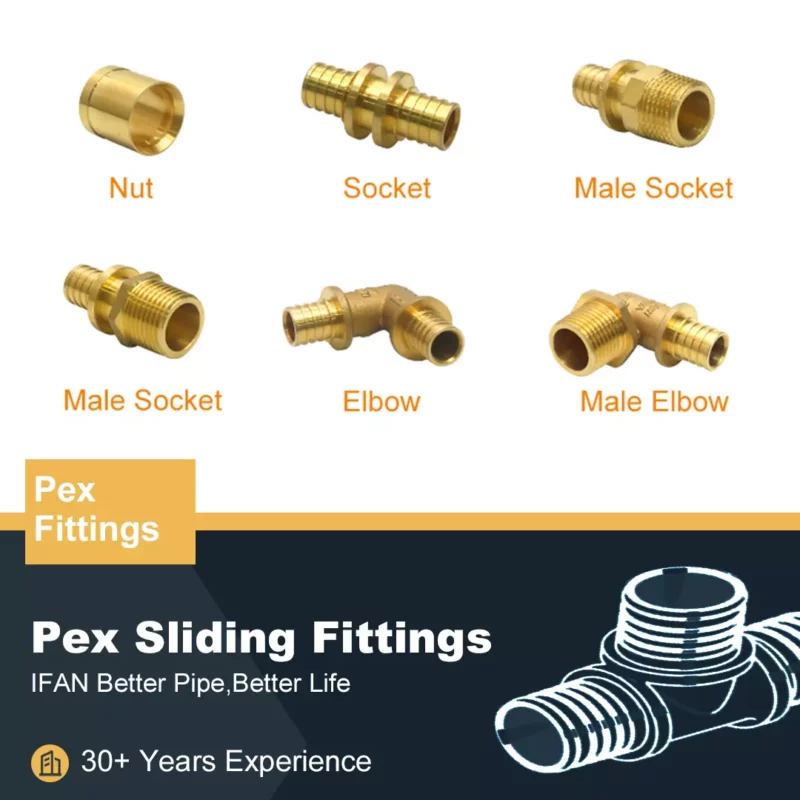
This system is used with crimp or clamp PEX fittings. These fittings are simple, barbed brass or plastic inserts. You slide the PEX tube over the barb, and then you use a specialized crimping or clamping tool to compress a separate stainless-steel ring (the clamp) over the tube. This ring’s force squeezes the PEX tightly onto the barb, creating a friction-based seal. The connection relies on the mechanical grip of the clamp and the PEX’s memory trying to return to its original size.
The PEX Press Fitting:
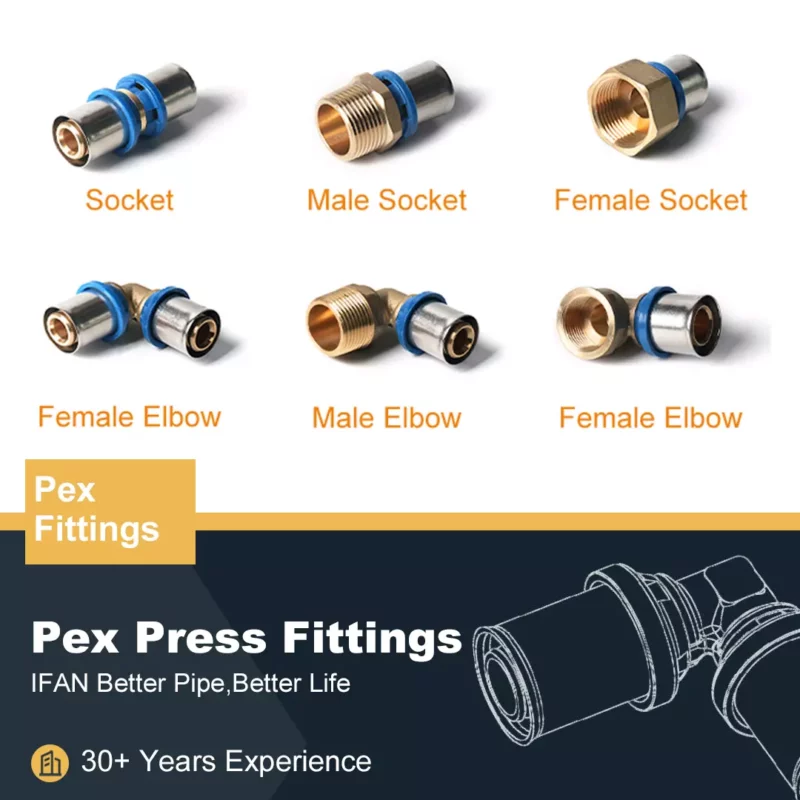
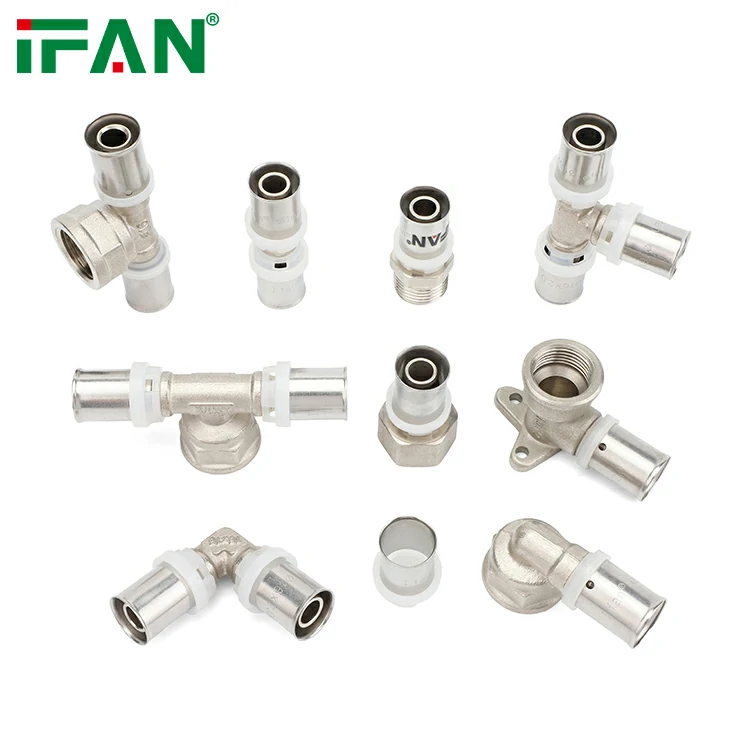
A PEX press fitting is a completely self-contained unit. It is a solid brass fitting with a pre-installed rubber O-ring seated in a precision groove. A stainless-steel press sleeve is loosely fitted over the body. When you apply the press tool, it permanently deforms this sleeve around the fitting and the PEX tube. This action simultaneously accomplishes two things: it creates a powerful mechanical lock, and it compresses the O-ring to form a permanent, watertight seal.
The fundamental difference? A clamp is an external component used to create a seal on a barbed fitting. A PEX press fitting is the fitting, with the sealing mechanism built-in.
The Visual Giveaways: How to Tell Them Apart Instantly
Even from across a supply room, you can easily distinguish these systems:
- Look at the Fitting: A crimp fitting is bare brass with barbs. A PEX press fitting has a distinctive, loose stainless-steel sleeve already on it.
- Look at the Ring: A stainless clamp is a separate, open ring. The sleeve on a press fitting is a closed, seamless ring.
- Look at the Tool: A crimp tool is a scissor-like device that squeezes the ring. A press tool is a large, jawed device that looks like a powerful drill.
The High Stakes of Mixing Systems
What happens if someone tries to force a connection? The most likely scenario is that they would try to use a crimp ring on a PEX press fitting. This would be a catastrophic failure.
- No Seal: The barbless, smooth surface of the press fitting is not designed to grip the PEX from the inside. The crimp ring would have nothing to clamp the pipe onto.
- Immediate Leak: The connection would leak the moment the system was pressurized. There is no O-ring in a crimp system, and the mechanical grip would be non-existent.
- System Failure: This kind of improper connection would fail any pressure test and would inevitably lead to water damage.
Using a press tool on a crimp fitting would be equally futile and would likely destroy both the fitting and the tool.
Choosing the Right Path for the Job
So, when do you use which system? Both have their place.
Consider the Crimp/Clamp System if:
- You are on a very tight budget and the initial tool investment for a press system is prohibitive.
- You are doing small-scale, simple residential work.
- You already own the crimp tools and are familiar with the technique.
Invest in the PEX Press Fitting System if:
- Speed, efficiency, and reduced labor costs are priorities.
- You are working in tight spaces where a crimp tool’s handles won’t fit.
- You value the added reliability of the O-ring seal and the visual verification of a correct press.
- You are working on commercial projects or larger homes where volume justifies the tool investment.
The key takeaway is that these are parallel, non-intersecting paths to a reliable PEX connection. You choose one system or the other for your project; you do not combine them. By understanding the distinct engineering behind a PEX press fitting versus a stainless clamp, you ensure that every connection you make is built to last, protecting your work, your reputation, and the buildings you work on.
Frequently Asked Questions (FAQ)
1. I have a crimp ring stuck on my PEX. Can I just press a PEX press fitting over it?
No. You must never press a fitting over any existing ring or debris. The PEX press fitting requires a clean, perfectly round pipe end to seal correctly. Cut out the section with the stuck ring and start with a fresh piece of pipe.
2. Are PEX press fittings more reliable than crimp systems?
Both are reliable when installed correctly with the proper tools. However, the PEX press fitting system is often considered more consistently reliable because the press tool eliminates human variation in applied force, and the O-ring provides a secondary, gasket-like seal beyond just friction.
3. Can I use the same PEX tubing for both crimp and press systems?
Generally, yes. Most standard PEX-b tubing is compatible with both systems. However, you must always use the fitting and connection method designed as a complete system. You cannot mix the fitting types.
4. My supplier was out of a crimp elbow. Can I buy a press elbow and just use a clamp on it?
Absolutely not. A PEX press fitting is only designed to be connected using the specific pressing process. Using a clamp on it will not form a seal and will result in a guaranteed leak. They are not interchangeable.
5. Is one system more expensive than the other?
The PEX press fittings themselves are more expensive than crimp fittings, and the initial tool investment is significantly higher. However, the press system’s speed can lead to lower overall labor costs on larger jobs, often offsetting the higher material price.
If you have read this article and have any questions, please feel free to contact IFAN. Below is our contact information:
Whatsapp:+86 13373827623
Email:[email protected]