

The Evolution of HDPE: From PE63 to PE100/PE4710
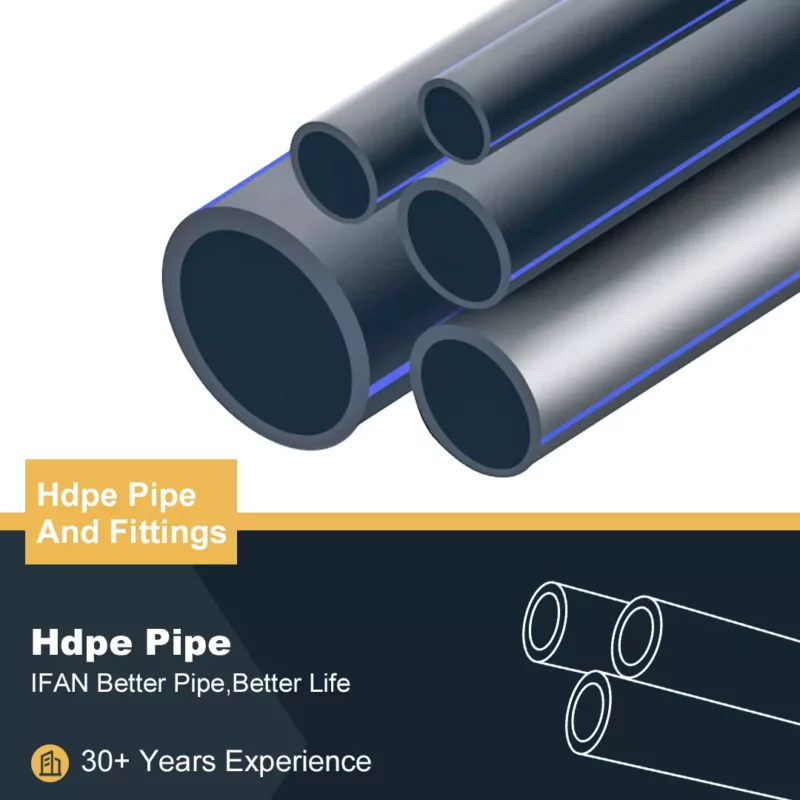
The quality of an HDPE fitting is rooted in the resin from which it is made. The polyethylene used for pipes and fittings has evolved significantly. Early generations like PE63 and PE80 have been largely superseded by advanced materials. PE100 (the ISO standard designation) and PE4710 (the PPI/ ASTM designation in North America) represent the current peak of the material science. These are not just purer forms of polyethylene; they are bimodal resins with a carefully engineered molecular structure.
Bimodal Molecular Structure: The Engine of Performance
PE100 and PE4710 are manufactured using a bimodal process that creates two distinct populations of polymer chains:
Long Chains: Provide high resistance to slow crack growth (SCG) and rapid crack propagation (RCP), ensuring long-term toughness and durability.
Short Chains: Allow for easy processing and high density, which contributes to the material’s stiffness and pressure resistance.
This synergistic combination results in a material that is both very strong and very tough, a combination that was difficult to achieve in earlier, unimodal resins.
Key Performance Properties Explained
Slow Crack Growth (SCG) Resistance: This is the most critical long-term property. SCG is a brittle failure mechanism that starts at a point of stress concentration. PE100/PE4710 fittings have an exceptionally high resistance to SCG, ensuring they can withstand constant pressure and external point loads for decades.
Rapid Crack Propagation (RCP) Resistance: RCP is a rare but catastrophic failure where a crack propagates along a pipe at high speed. The bimodal structure of these advanced resins dramatically increases the energy required to initiate RCP, making the system much safer.
Hydrostatic Design Basis (HDB): PE100 and PE4710 have a high HDB of 1000 psi (6.9 MPa) at 73°F (23°C), which is the foundation for their high Pressure Nominal (PN) ratings.
The Superiority of PE100 RC (Resistant to Crack)
PE100 RC is a subclass of PE100 that has passed additional, more severe tests for SCG and RCP resistance, such as the Notched Constant Ligament Stress (NCLS) test. Fittings made from PE100 RC are the premium choice for the most challenging installations, including directional drilling, sliplining, and in rocky, unstable soils where the risk of point loading and surface damage is high.
If you have read this article and have any questions, please feel free to contact IFAN. Below is our contact information:
Whatsapp:+86 13373827623
Email:[email protected]