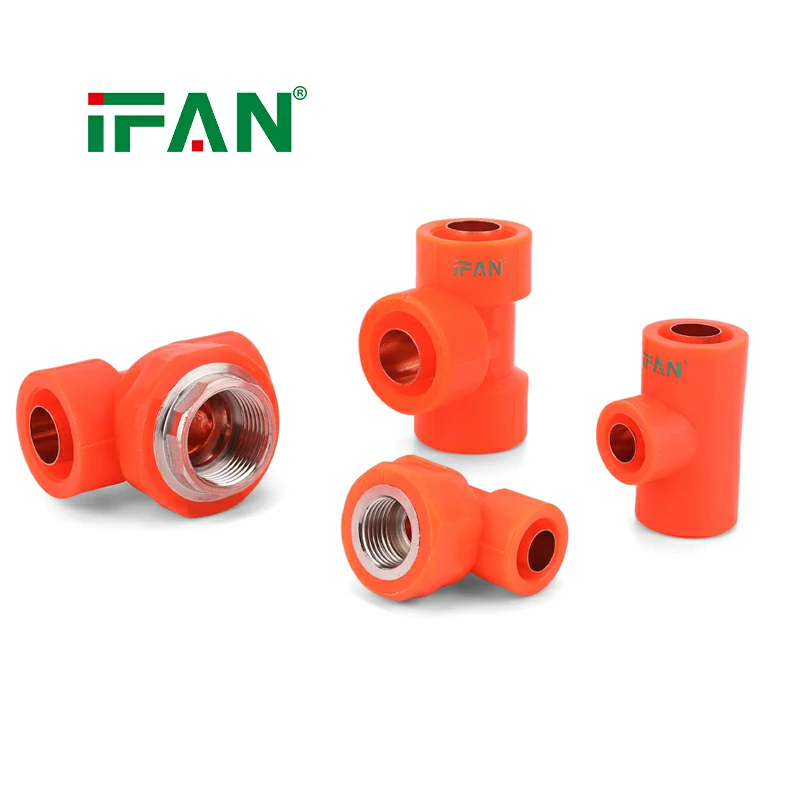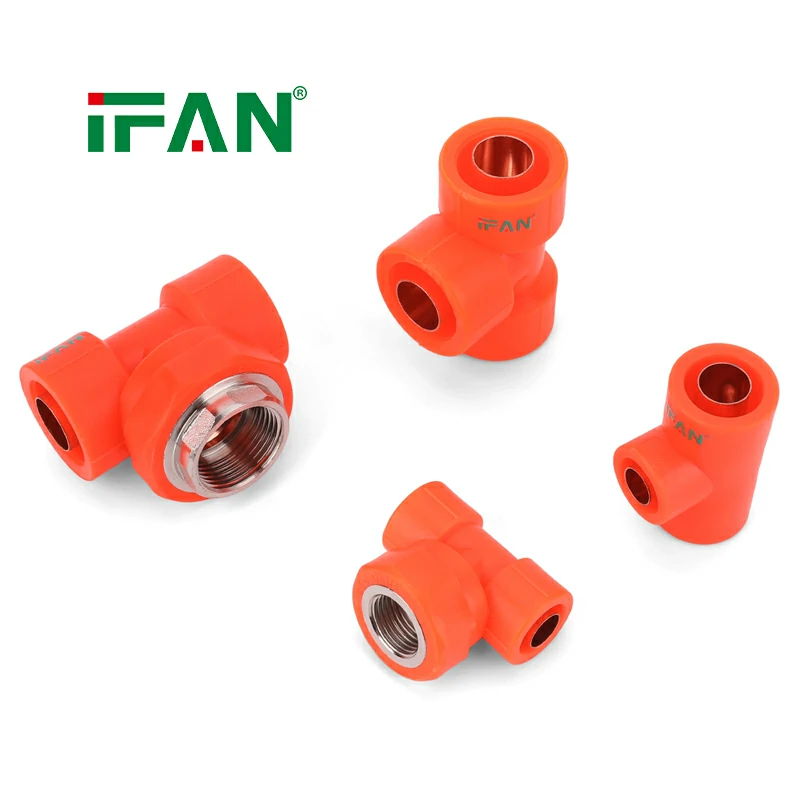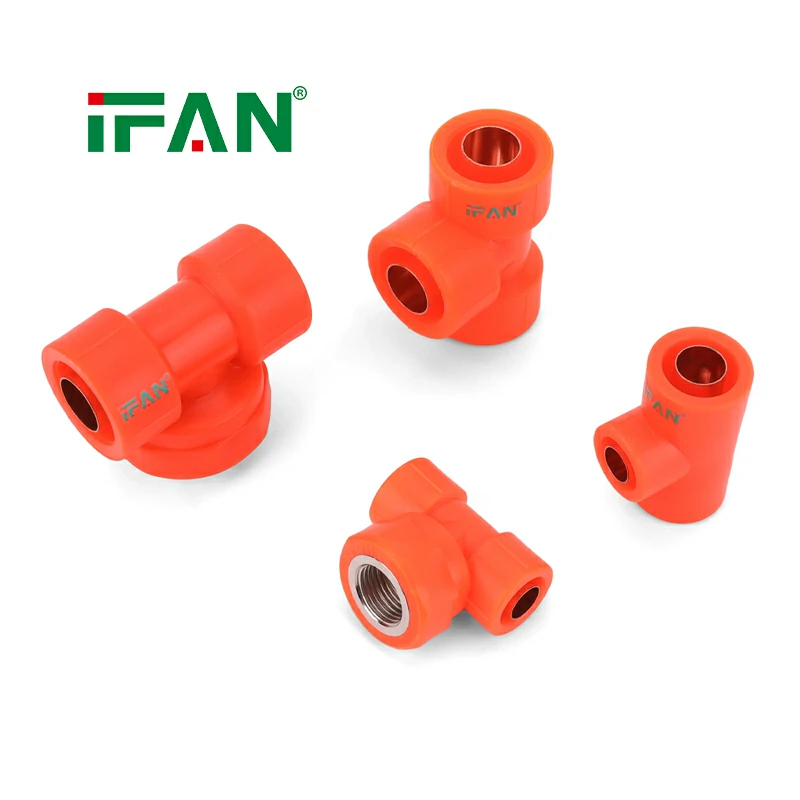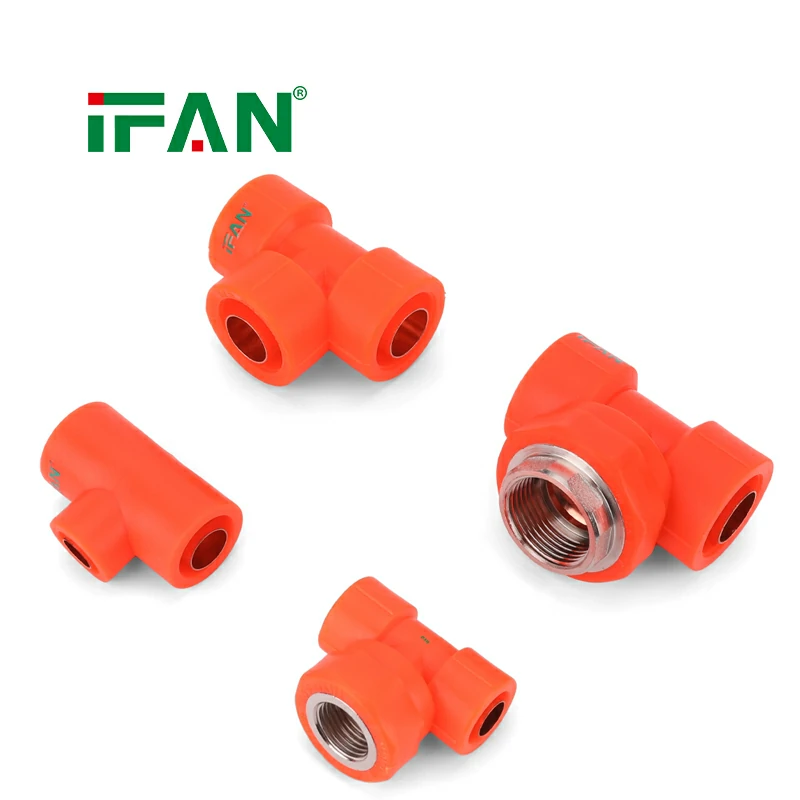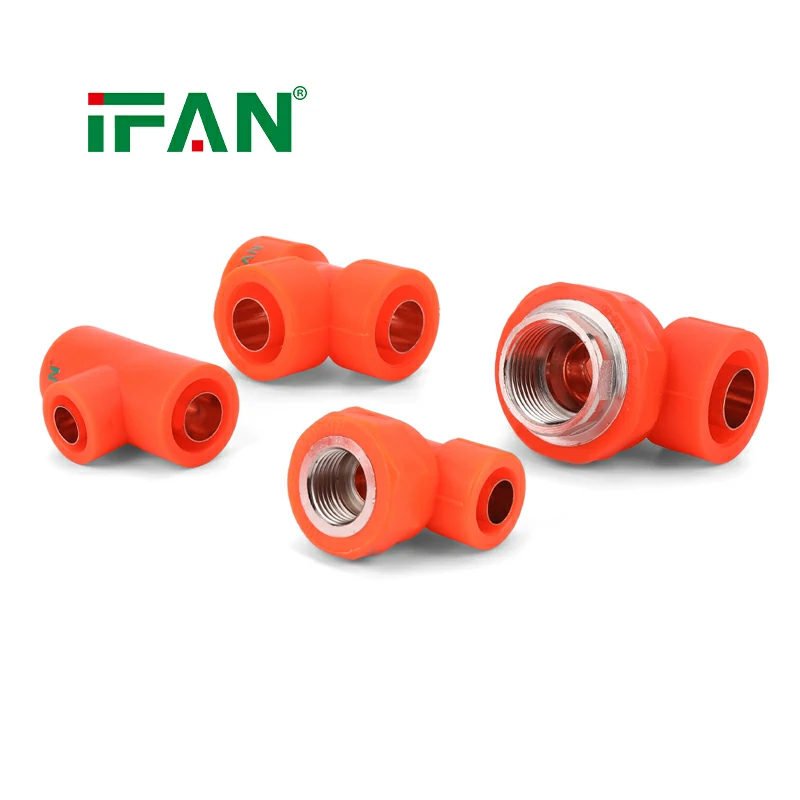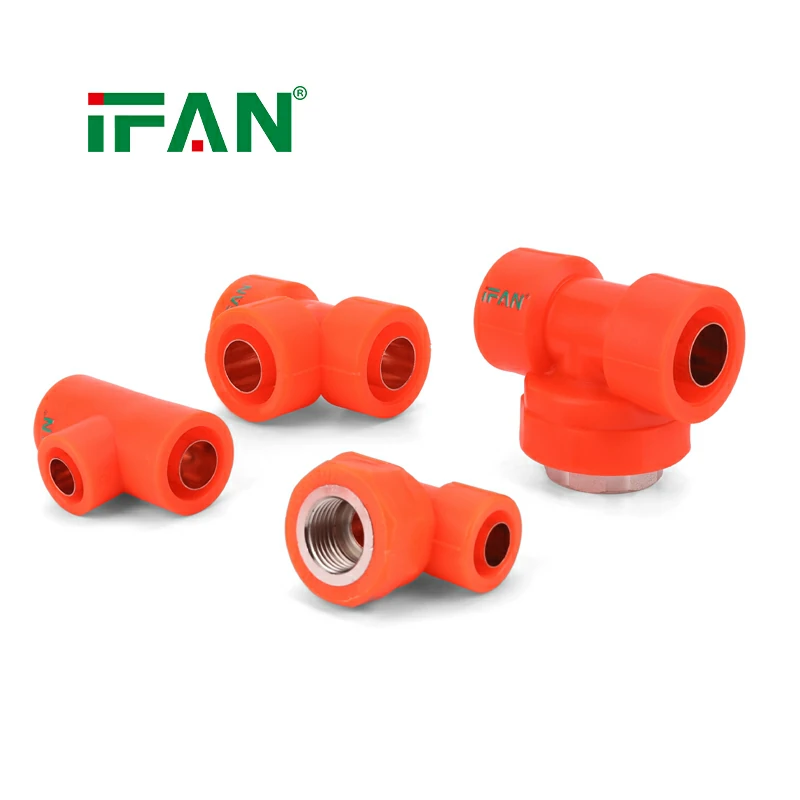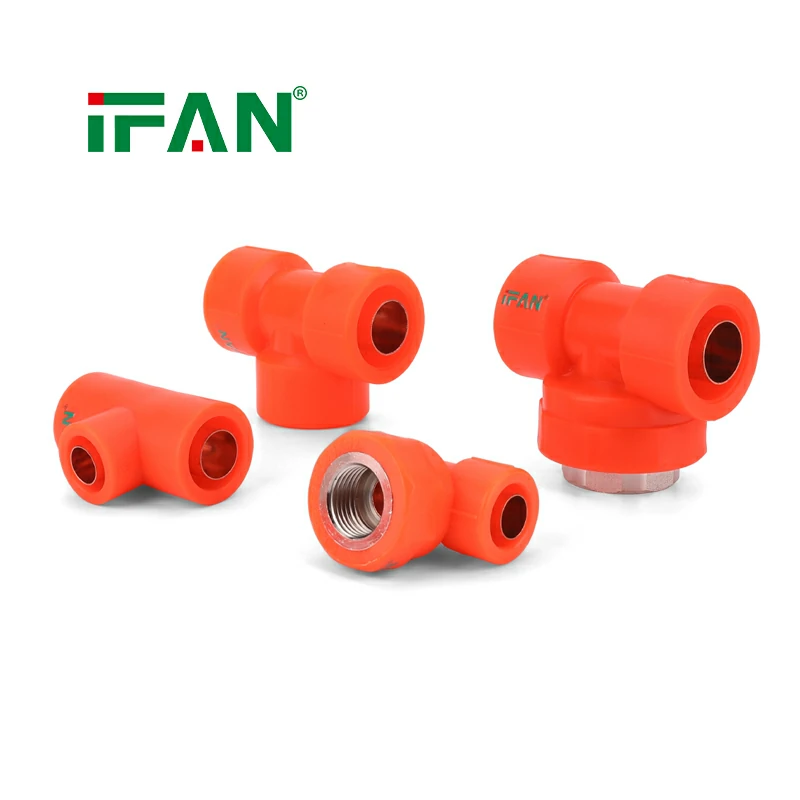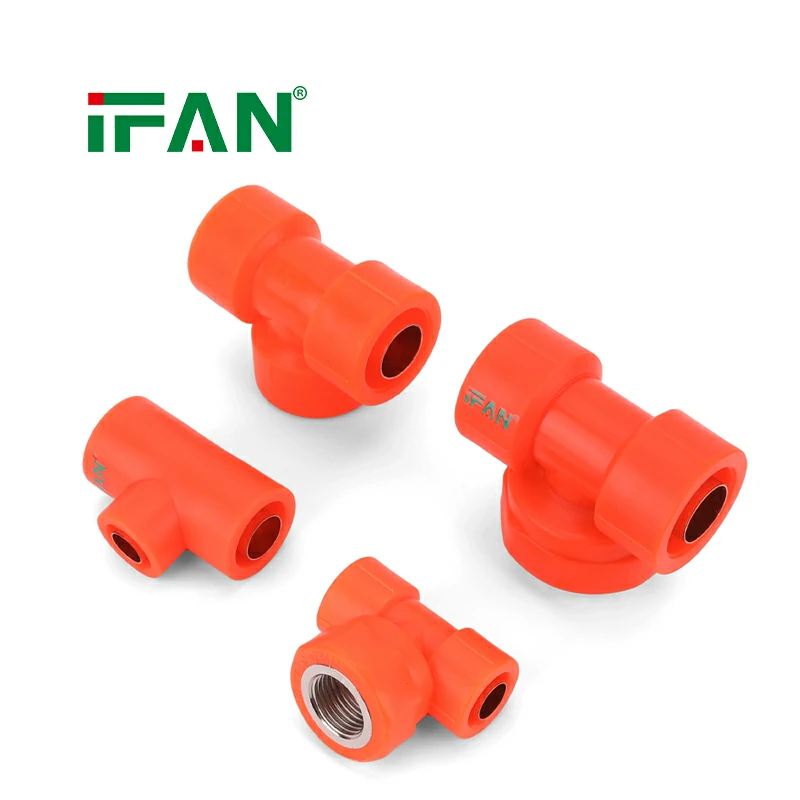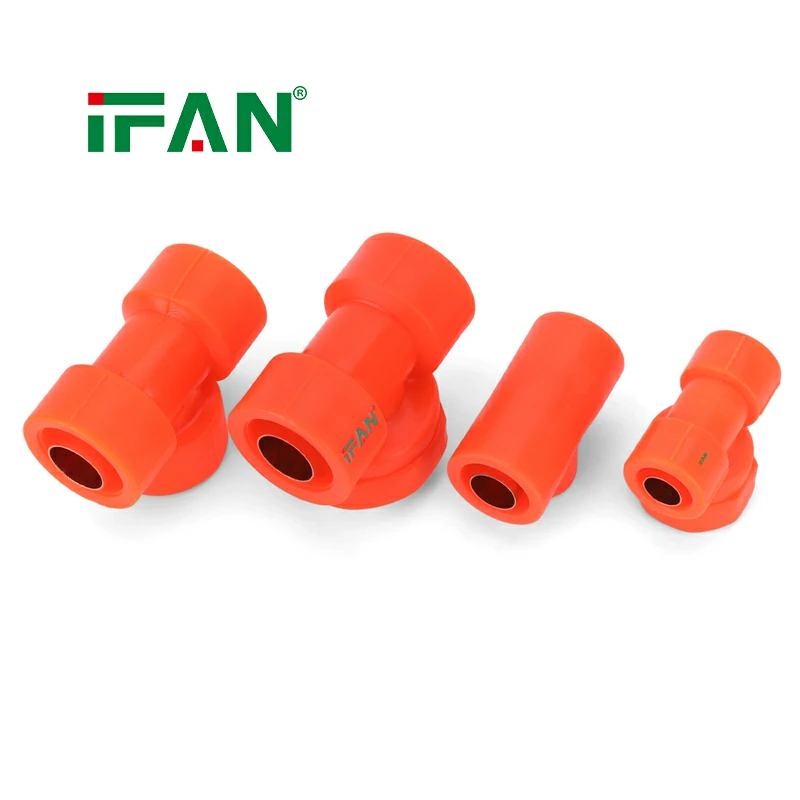
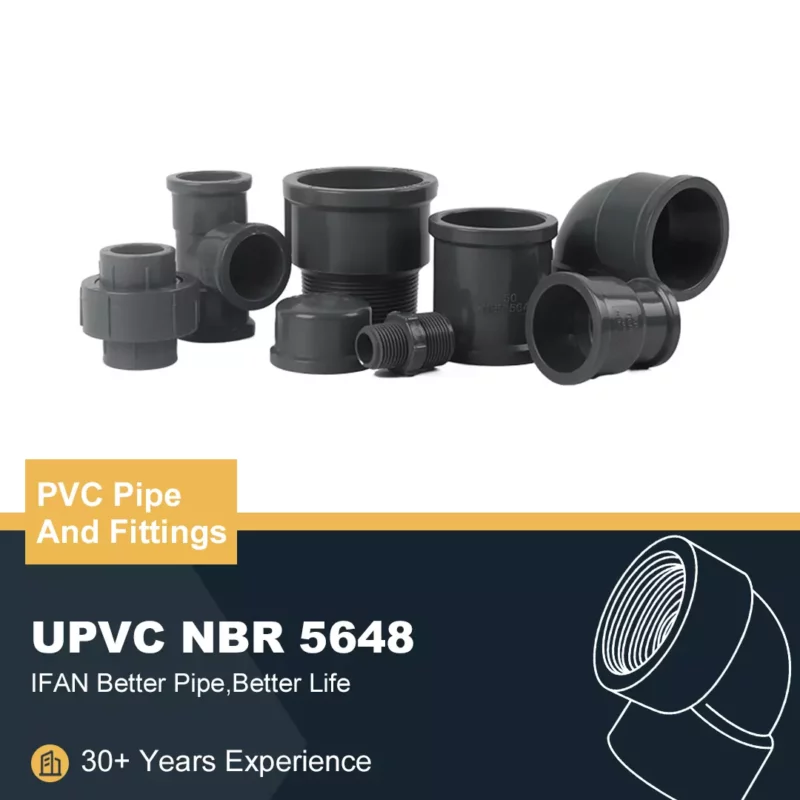
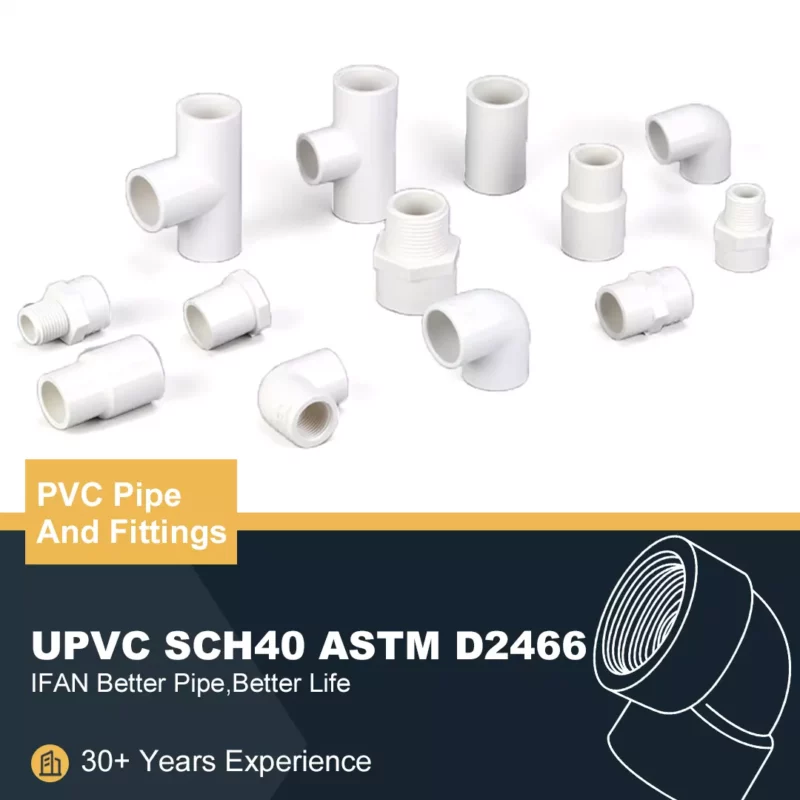
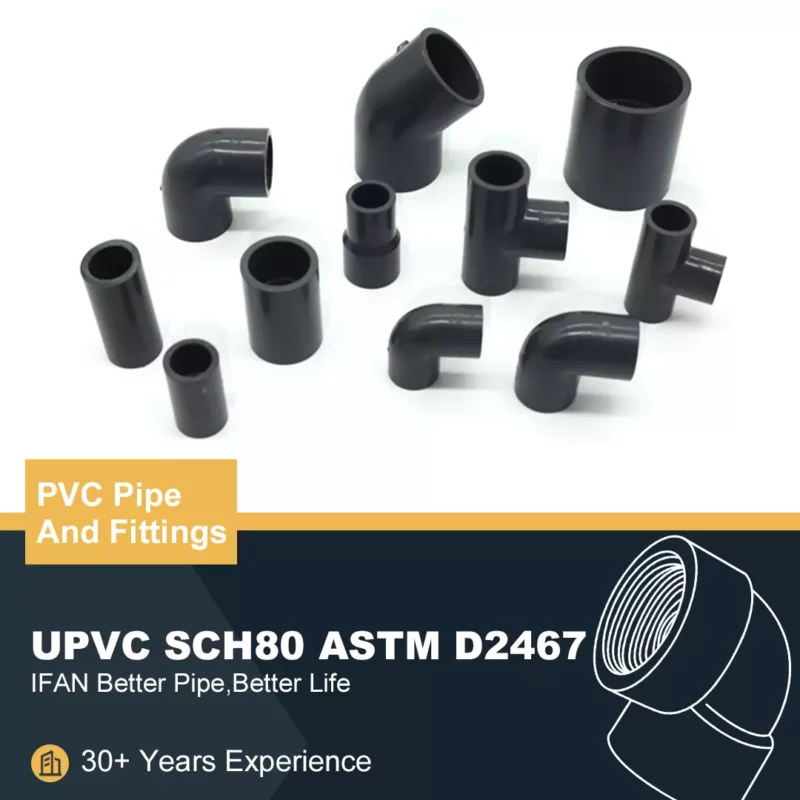
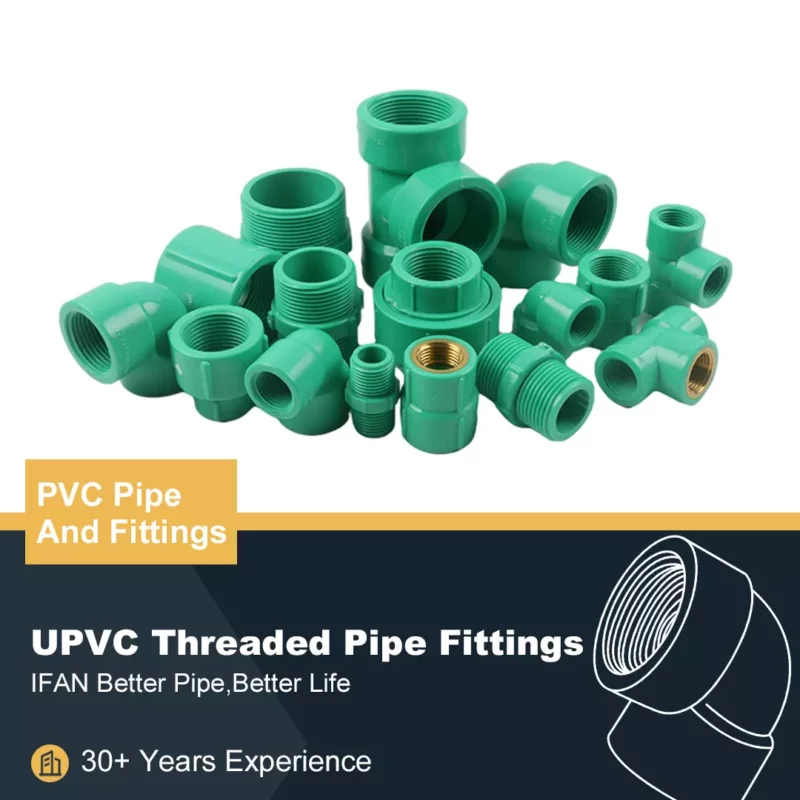
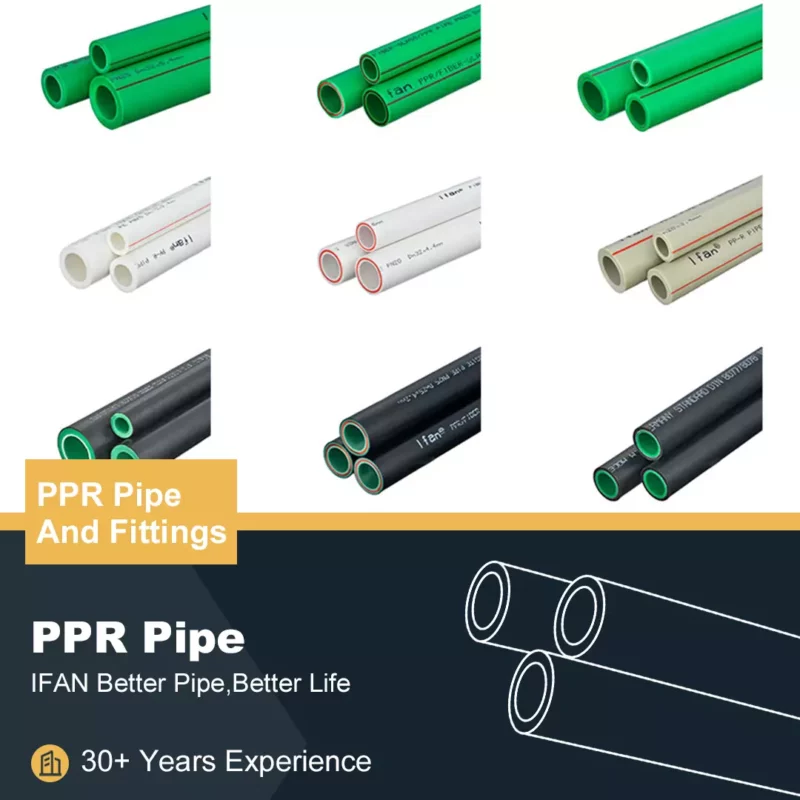
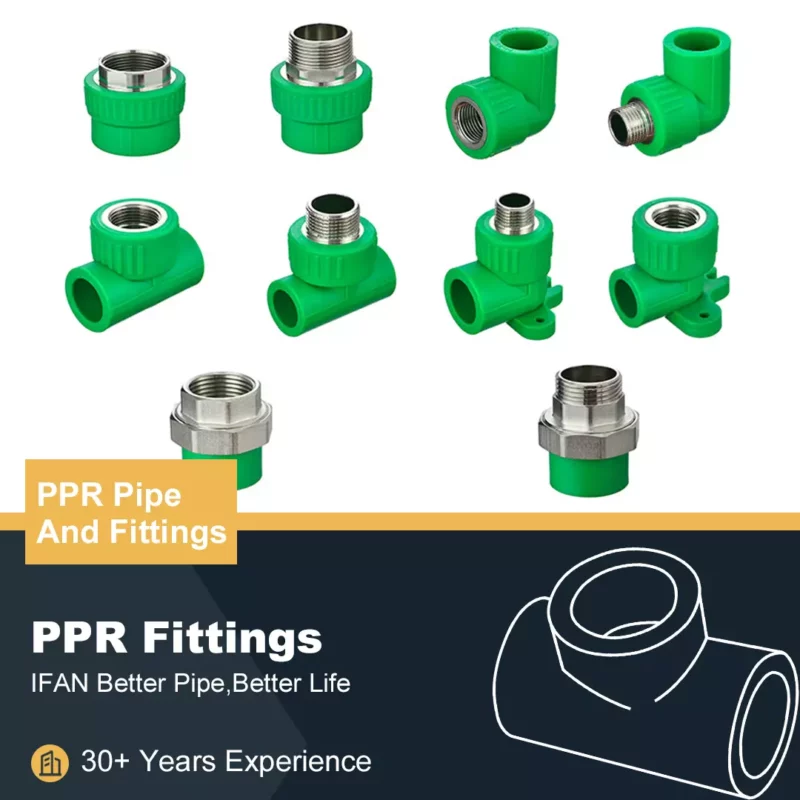
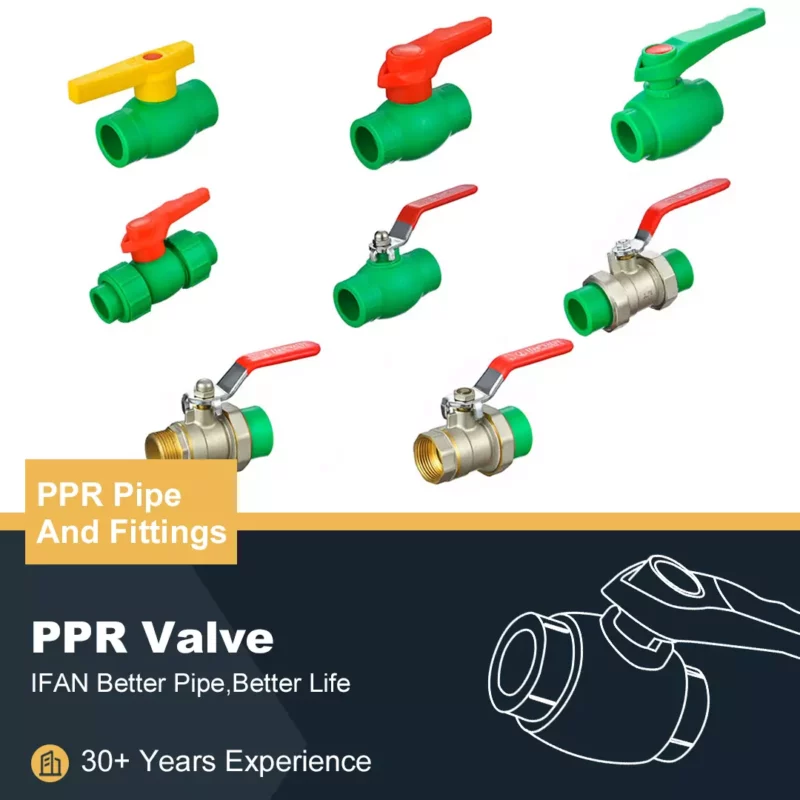
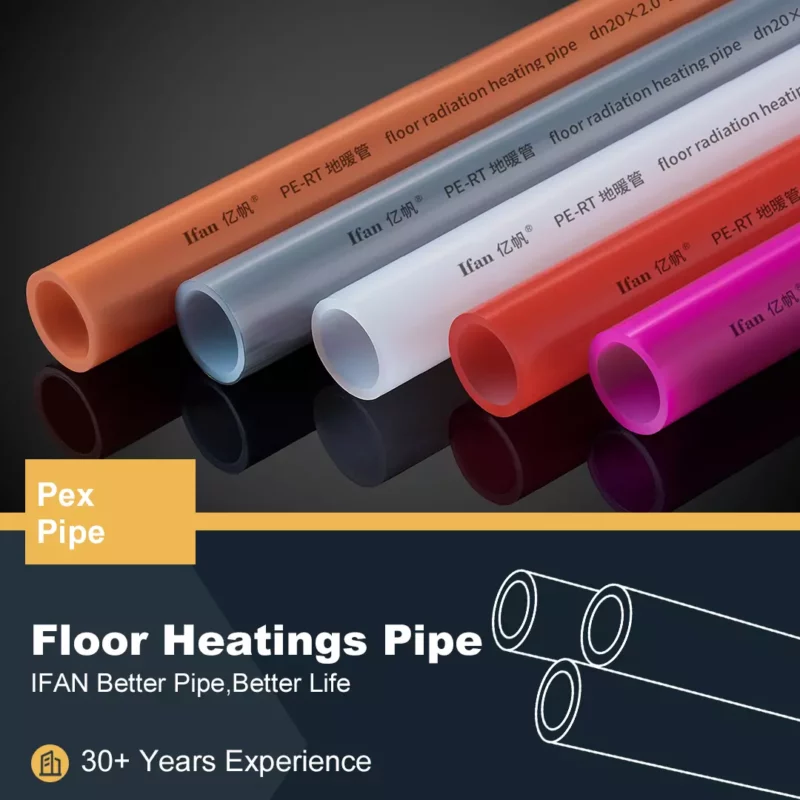
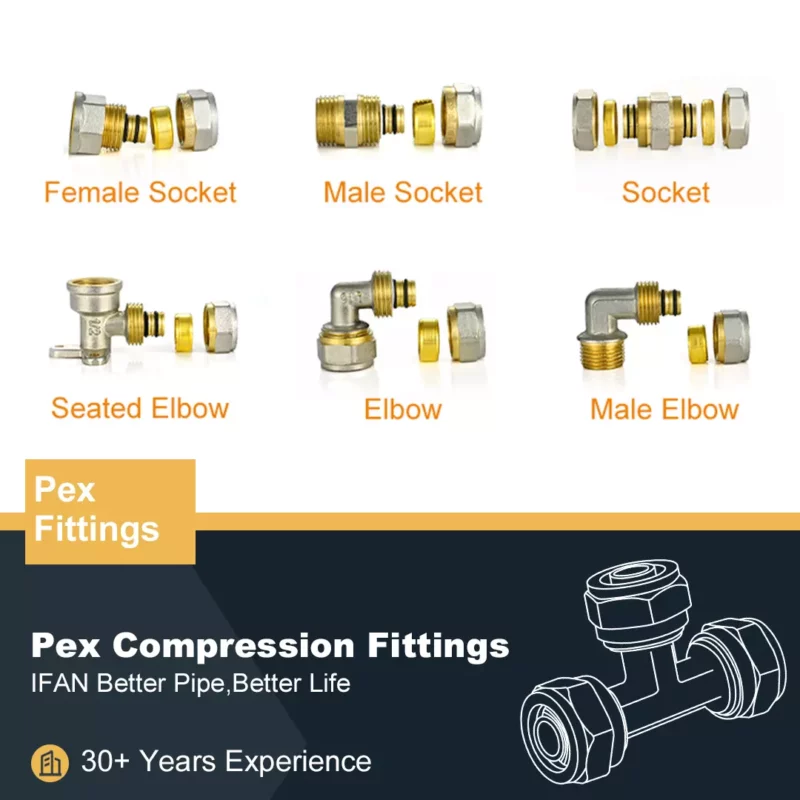
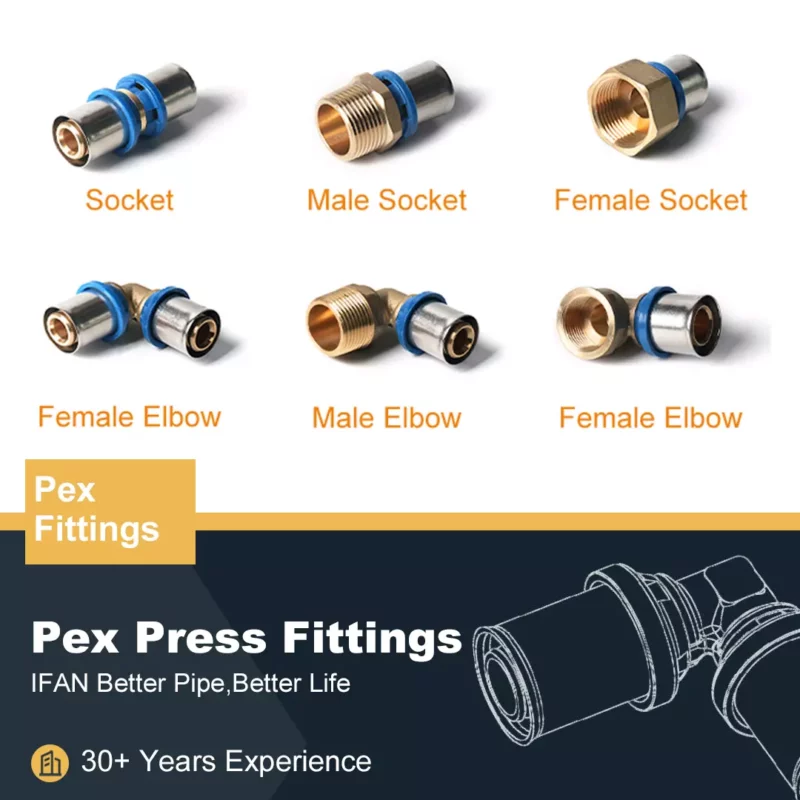
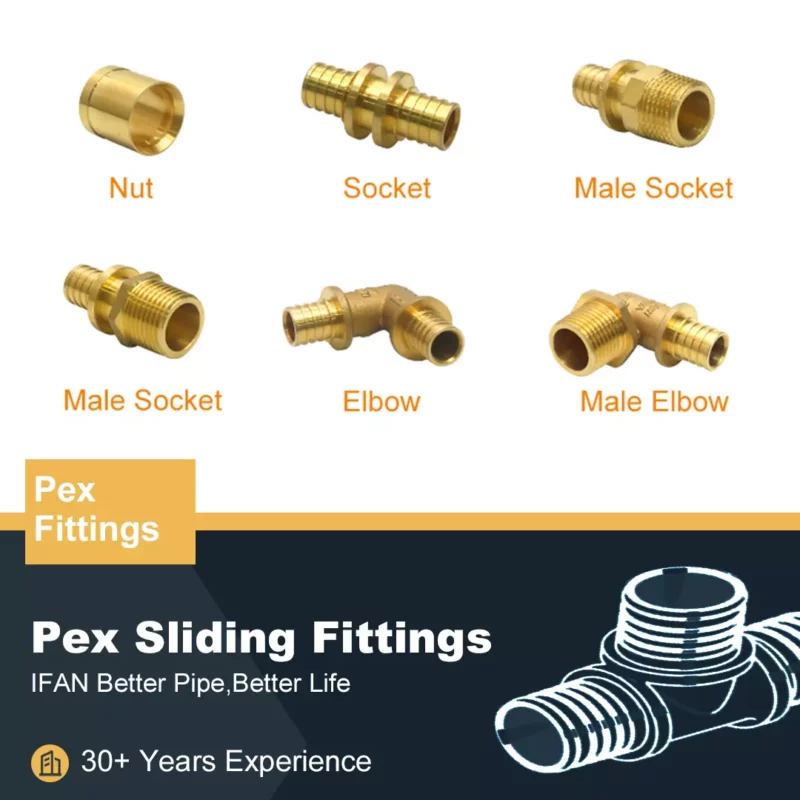
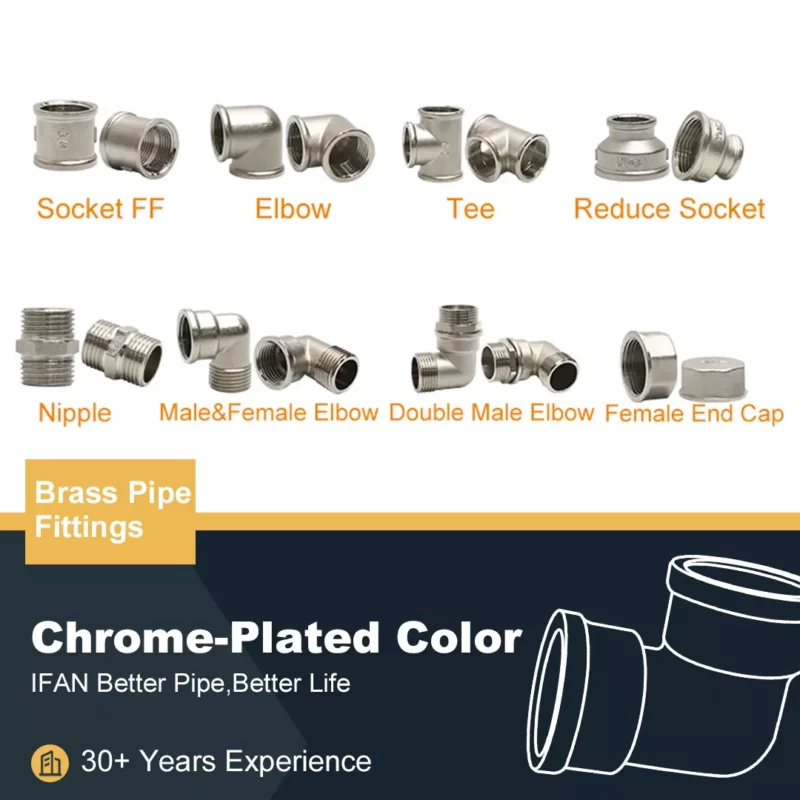
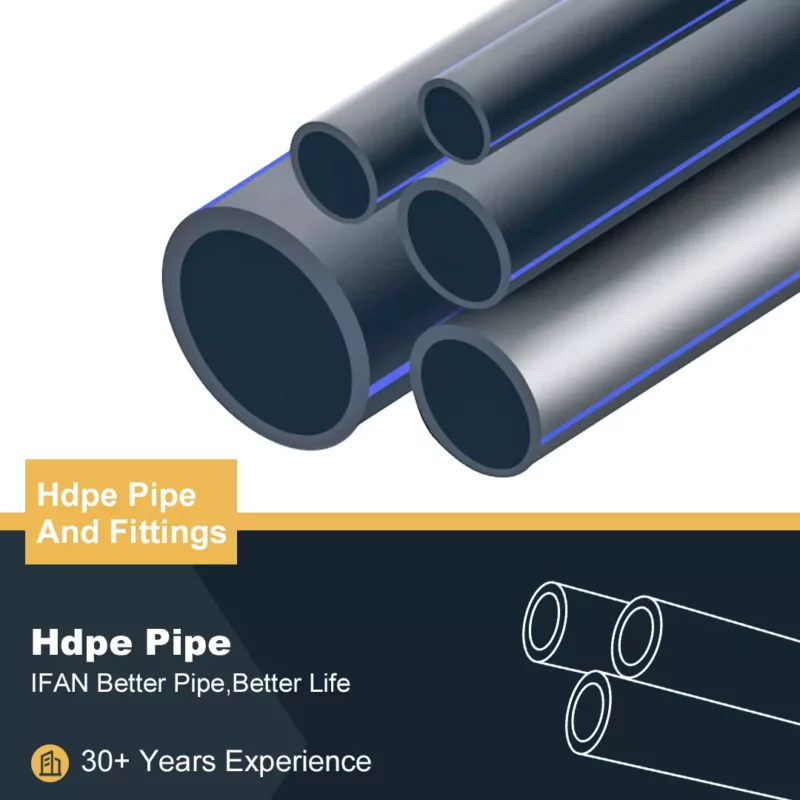
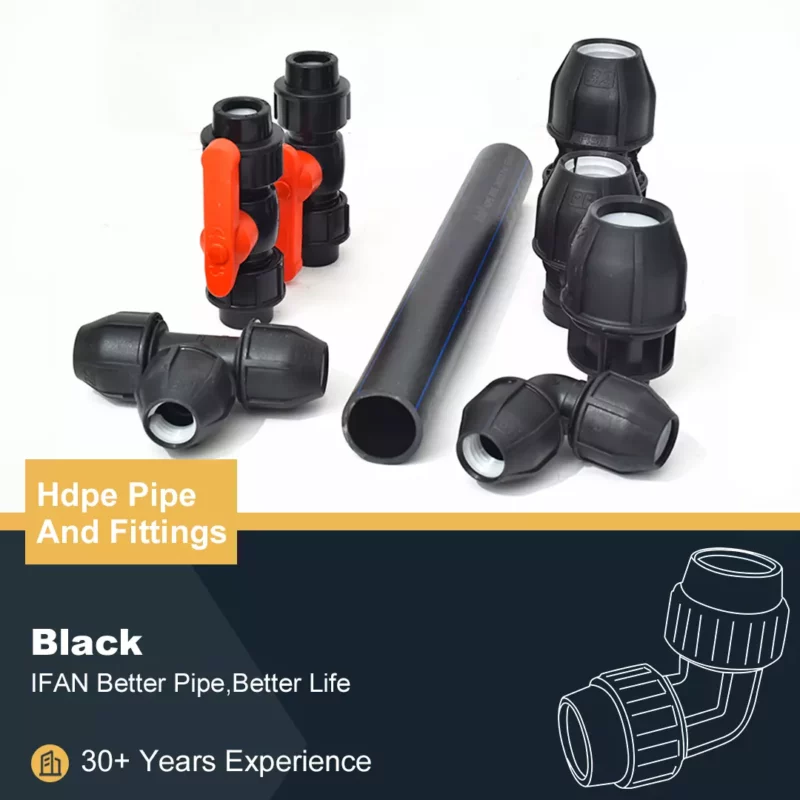
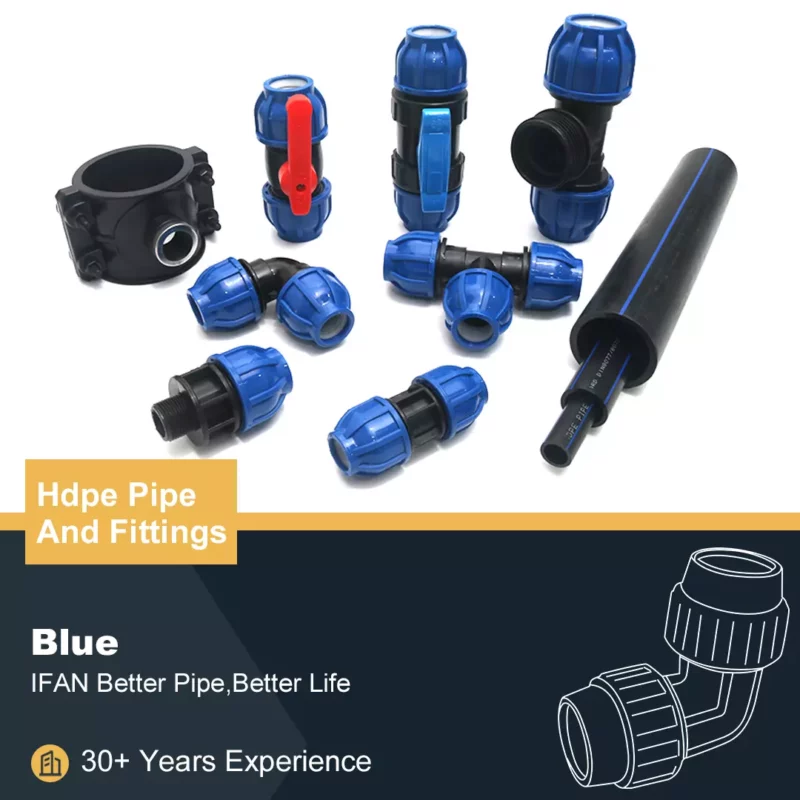
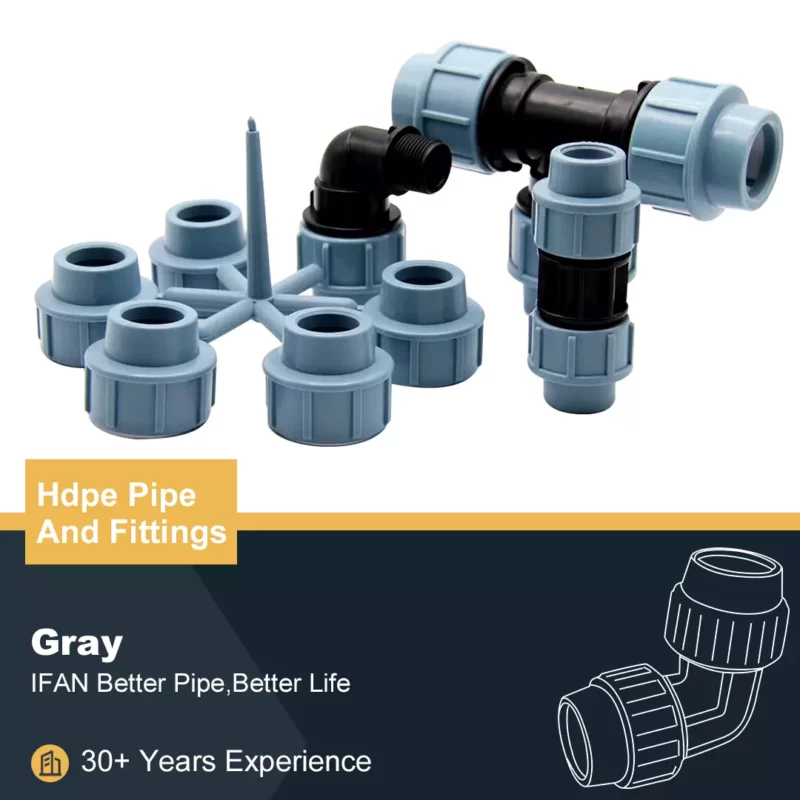




PPR fittings are components used to connect PPR pipes in a plumbing system.
Their dominance is not accidental;
it is the result of a superior set of properties that outperform traditional materials like metal or PVC.
- Exceptional Durability: Resistant to corrosion, scale buildup, and chemical attacks.
- PPR fittings have a proven service life of over Long-term durability according to standards, ensuring a long-term, maintenance-free solution.
- Leak-Proof Joints: The unique heat-fusion welding process permanently melds the pipe and fitting into a single, monolithic piece. This eliminates the primary failure point in traditional systems—the joints—making leaks virtually impossible.
- Hygienic and Safe: The smooth inner surface prevents bacterial growth and mineral deposits.
- ensuring the delivery of clean, potable water, which is a critical concern for residential and commercial buildings.
- Energy Efficient and Eco-Friendly: PPR is a recyclable material.
- and its excellent thermal insulation properties reduce heat loss in hot water lines. saving energy.
Key Market Drivers Fueling Growth
The global PPR fittings market is experiencing robust growth, propelled by several powerful macroeconomic and industry-specific factors.
H2: 1. Global Urbanization and Construction Boom
Rapid urbanization, particularly in the Asia-Pacific and Middle East regions, is leading to an unprecedented surge in residential, commercial, and industrial construction. Every new building requires a reliable plumbing system, directly driving the demand for PPR fittings. Government investments in public infrastructure, including hospitals, schools, and water treatment plants, further solidify this demand.
H2: 2. Replacement of Aging Plumbing Infrastructure
In mature markets like North America and Europe, a significant opportunity lies in the replacement of old. corroded galvanized steel and copper piping systems. These legacy systems are prone to leaks, contaminate water quality, and are costly to maintain. PPR fittings offer a perfect. cost-effective. and durable solution for large-scale retrofit projects.
H2: 3. Growing Preference for Sustainable and Efficient Building Materials
The global push for green building certifications (such as LEED and BREEAM) is influencing material choices.
The eco-friendly profile, long lifecycle, and energy-saving characteristics of PPR fittings align perfectly with the principles of sustainable construction.
making them a preferred choice for architects and engineers.
H2: 4. Technological Advancements and Product Innovation
Manufacturers are continuously innovating to enhance the value proposition of PPR fittings. This includes the development of:
- Anti-bacterial PPR: Fittings with integrated additives that inhibit microbial growth.
- Fiber-Reinforced PPR (PPR-FD): For applications requiring higher pressure resistance.
- Faster, Smarter Welding Tools: Improving installation speed and consistency for plumbers.
Challenges and Restraints
Despite the positive outlook, the market faces certain challenges:
- Volatility in Raw Material Prices: The cost of polypropylene is tied to crude oil prices. making it susceptible to fluctuations that can impact profit margins.
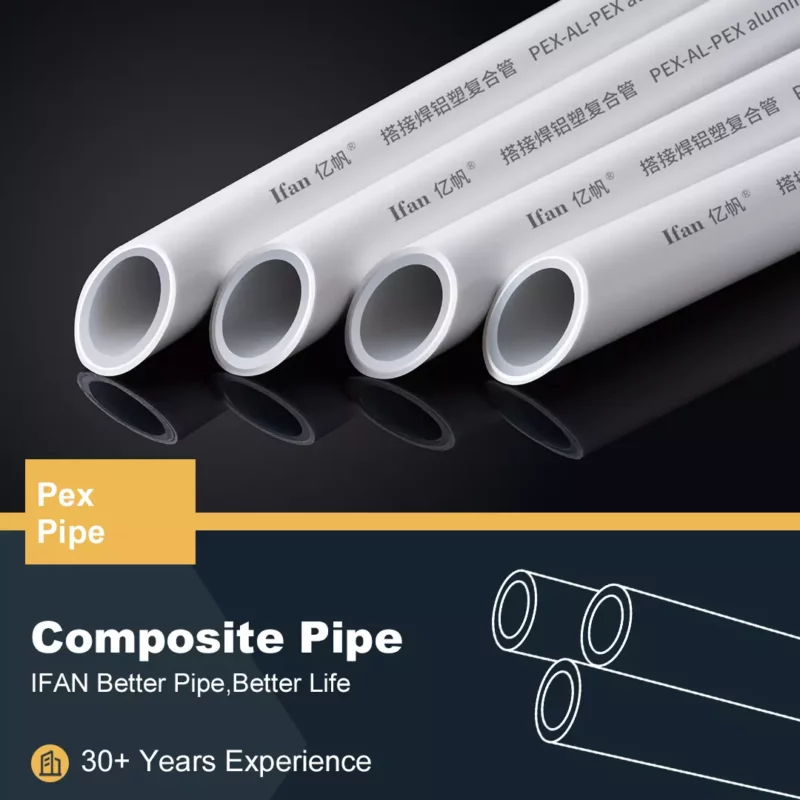
- Competition from Alternative Materials: Materials like PEX and CPVC remain strong competitors in specific regional markets and applications.
- Quality Disparity: The presence of low-quality. non-compliant PPR fittings in some markets can pose a risk to project integrity and consumer safety.
Regional Market Analysis
- Asia-Pacific: The undisputed leader and the fastest-growing region. China is the largest producer and consumer, with massive infrastructure projects fueling demand. India, Vietnam, and Indonesia are emerging as high-growth markets due to rapid urbanization.
- Europe: A mature market characterized by high-quality standards and a strong focus on renovation and replacement activities. The demand is steady and driven by stringent building codes.
- North America: While PEX is a strong incumbent, the PPR fittings market is gaining traction, particularly in commercial applications and among communities with European building influences.
- Middle East & Africa: Growth is fueled by massive investments in urban development and tourism infrastructure, such as new cities, hotels, and hospitals.
Future Outlook and Conclusion
The future of the PPR fittings market appears exceptionally bright. The convergence of global urbanization, infrastructure modernization, and the shift toward sustainable building practices creates a powerful, long-term growth trajectory. The market is expected to continue its expansion at a significant Compound Annual Growth Rate (CAGR) through 2030 and beyond.
In conclusion, the PPR fittings market is more than just a segment of the construction industry; it is a critical enabler of safe As technology continues to improve and global awareness of their benefits grows. PPR fittings are set to solidify their position as the foundational component of plumbing systems worldwide.
Stakeholders across the value chain. from raw material suppliers to distributors and contractors. are poised to benefit from this dynamic and essential market.
If you have read this article and have any questions, please feel free to contact IFAN. Below is our contact information:
Whatsapp:+86 13373827623
Email:[email protected]