


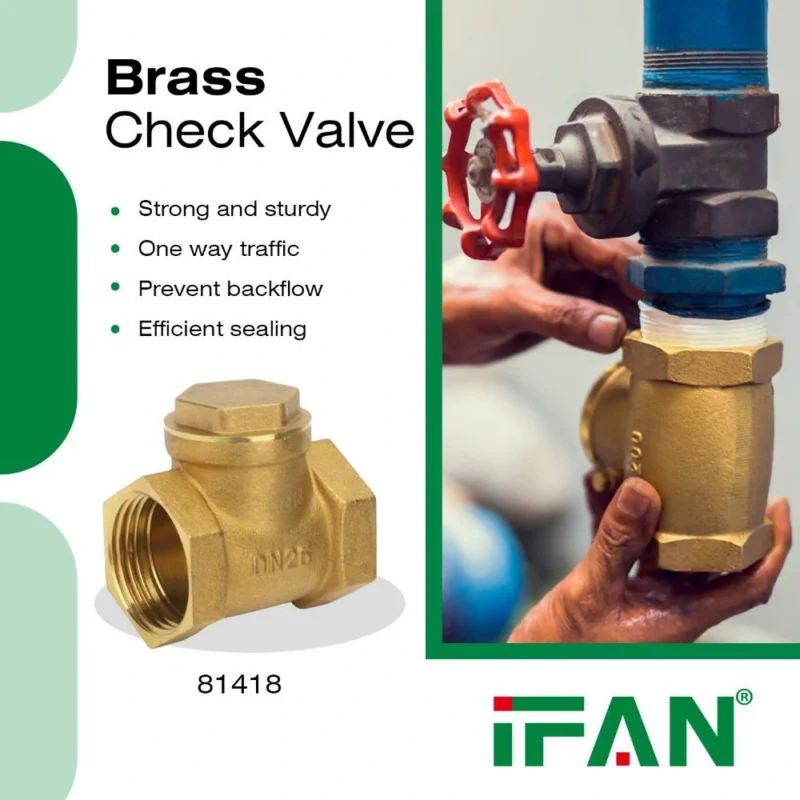
Introduction to Brass Check Valves
Brass check valves are essential components in modern plumbing systems. They are designed to allow fluid to flow in one direction only. This prevents reverse flow, which can damage plumbing infrastructure or cause contamination. Made from a strong and corrosion-resistant metal, brass check valves offer long-term performance. They are commonly used in both residential and commercial plumbing systems. Their reliable operation and minimal maintenance needs make them a preferred choice. These valves work automatically without the need for manual intervention. As water or fluid moves forward, the valve opens. When flow reverses, the valve closes instantly to block it.
Why One-Way Flow Matters
One-way flow is critical in plumbing systems to prevent contamination and maintain pressure balance. If water flows backward, it can re-enter clean supply lines. This can introduce pollutants or bacteria into drinking water. Check valves stop this backflow from occurring. In pressurized systems, backflow can also damage pumps, filters, and heating equipment. A brass check valve ensures water moves in the correct direction only. It protects appliances like boilers, water heaters, and filtration units. Consistent forward flow helps plumbing systems operate safely and efficiently. This makes one-way flow control a fundamental part of smart plumbing design.
Durability of Brass Material
Brass is a popular choice for valve construction due to its excellent material properties. It is an alloy of copper and zinc, offering both strength and corrosion resistance. Unlike plastic, brass handles higher temperatures and pressures with ease. It resists wear and tear even under heavy use. Brass does not rust and remains stable when exposed to water or air. These qualities extend the lifespan of the valve. In plumbing systems, where exposure to moisture is constant, brass proves reliable. Its resistance to scaling and mineral deposits adds to its durability. As a result, brass check valves need fewer replacements over time.
Key Features of Brass Check Valves
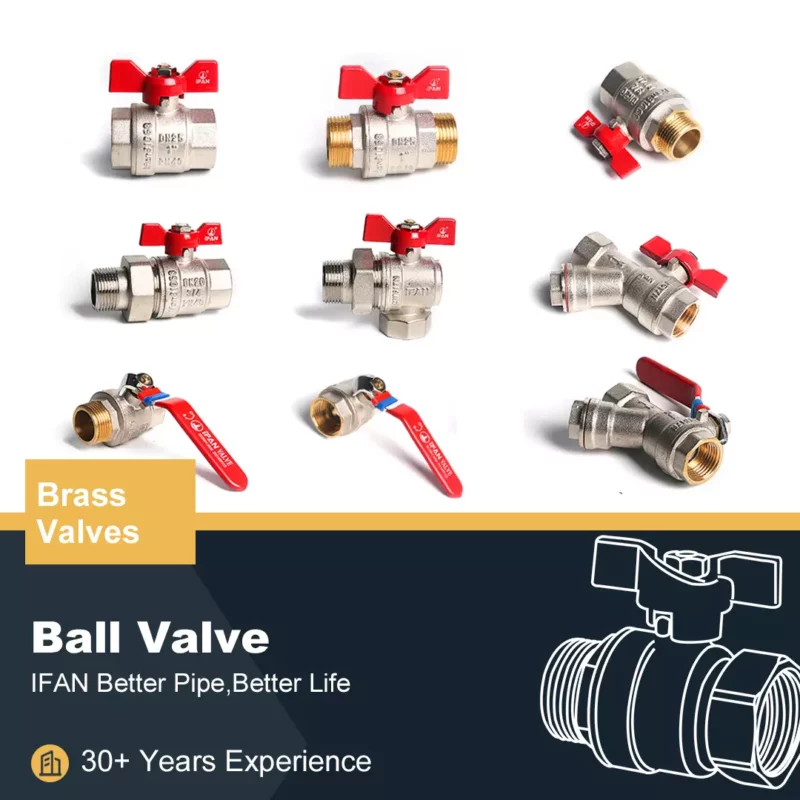
Brass check valves have several features that make them ideal for plumbing use. They offer a tight seal to prevent leaks. Most include a built-in spring or disc mechanism for automatic operation. The valves are compact and easy to install in tight spaces. They come in various sizes to fit different pipe dimensions. Some are threaded, while others have compression fittings. The design supports both vertical and horizontal installation, depending on the valve type. Additionally, brass valves maintain performance even when exposed to hot water. Their low maintenance and strong sealing capability make them a trusted solution for flow control.
Types of Brass Check Valves
There are several types of brass check valves, each designed for specific applications. Swing check valves use a hinged disc that swings open with flow and closes when flow stops. They work best in horizontal systems with steady flow. Spring check valves use a spring-loaded disc that snaps shut quickly when flow reverses. These are ideal for systems with pulsing or vertical flow. Ball check valves use a floating ball to block reverse flow. They are simple and reliable for low-pressure applications. Each type offers one-way flow control but differs in design and speed of closure. Choosing the right type depends on the system requirements.
Applications in Residential Plumbing
In homes, brass check valves are used in multiple locations. They are often found near water heaters to prevent hot water backflow. In irrigation systems, they stop dirty water from re-entering clean supply lines. Dishwashers, washing machines, and sump pumps may also use check valves. These valves protect appliances and maintain system pressure. When connected to a municipal water supply, check valves ensure water quality remains safe. Their compact size makes them easy to install in tight plumbing layouts. For homeowners, using brass check valves reduces risk of contamination and improves system reliability.
Commercial Plumbing and HVAC Systems
In commercial buildings, brass check valves are essential for managing large plumbing and HVAC systems. They are installed in supply lines, pump systems, and fire protection systems. Commercial kitchens and laundries use them to prevent backflow into clean water sources. HVAC systems rely on them to control coolant and condensate flow. These valves ensure consistent performance and protect valuable equipment. Because brass can withstand higher temperatures and pressures, it’s ideal for commercial-grade systems. Its corrosion resistance also ensures longevity even in complex, high-demand plumbing environments. Regular checks keep these valves working efficiently with minimal maintenance.
Installation Guidelines
Proper installation ensures the valve functions correctly. First, verify the flow direction marked on the valve body. Install the valve so that fluid enters in the correct direction. Use compatible pipe fittings and thread sealant to avoid leaks. Avoid overtightening the valve, as it may crack or distort the brass body. Clean the pipes before installation to remove debris that could block the valve mechanism. For spring-type valves, check manufacturer recommendations on vertical or horizontal positioning. After installation, test the system to confirm proper flow and no leakage. Properly installed brass check valves will offer years of reliable service.
Maintenance and Troubleshooting Tips
Brass check valves require little maintenance, but regular inspection improves performance. Look for signs of leaking, noise, or reduced flow. These may indicate internal wear or debris blocking the valve. In hard water areas, mineral deposits can affect the valve’s seal. Cleaning or replacing the valve may be needed in such cases. If the valve sticks open, reverse flow may occur. This can damage equipment or pollute clean water. If issues are found, shut off the water supply before removing the valve. Most problems are easy to fix by cleaning or replacing parts. Periodic checks keep plumbing systems safe and efficient.
Environmental and Economic Benefits
Using brass check valves offers both environmental and economic benefits. They prevent water wastage caused by backflow. By protecting systems from contamination, they reduce health risks and costly repairs. Brass is a recyclable material, lowering the environmental impact. Its durability means fewer replacements over time, reducing material waste. Energy efficiency is also improved in systems where pressure remains stable. For property owners, investing in quality brass valves means long-term savings. Their automatic operation reduces the need for active monitoring, adding convenience. In sustainable plumbing designs, brass check valves are a smart, eco-friendly choice.
Conclusion
Brass check valves are an ideal solution for plumbing systems that require reliable one-way flow control. Their durable construction, corrosion resistance, and automatic operation make them suitable for various applications. From homes to commercial buildings, they protect water quality and system integrity. Easy to install and low in maintenance, they provide long-term value. Available in several types and sizes, they can be matched to specific plumbing needs. By preventing backflow, they support safe and efficient water management. With their many advantages, brass check valves remain a trusted component in modern plumbing design.
If you have read this article and have any questions, please feel free to contact IFAN. Below is our contact information:
Whatsapp:+86 13373827623
Email:[email protected]