

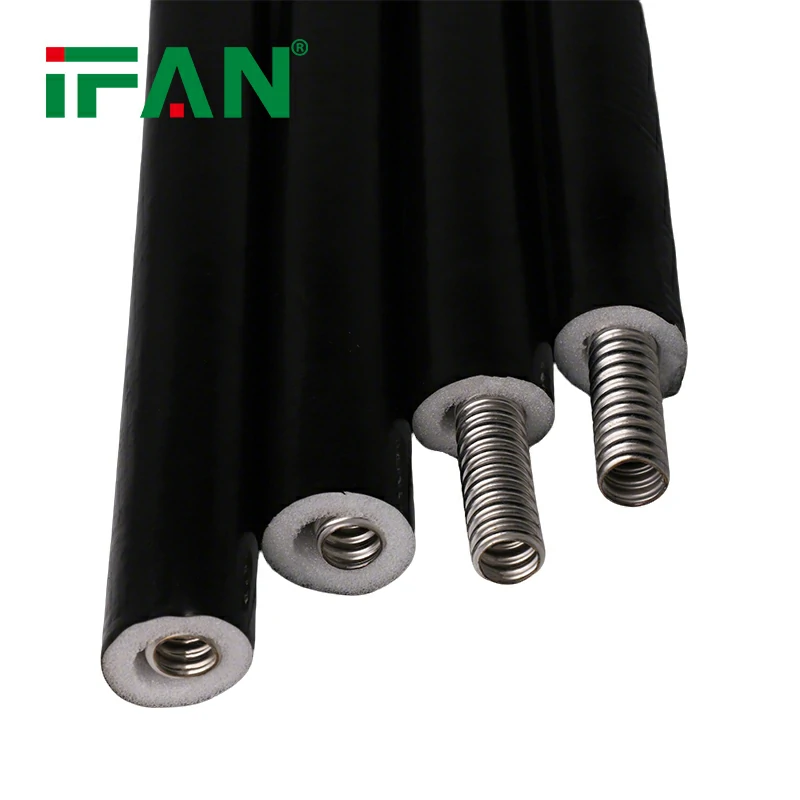
The outer layer uses PE material to resist abrasion, UV light, and chemical exposure during outdoor installations.
Corrugated Stainless Steel Ensures Flexibility
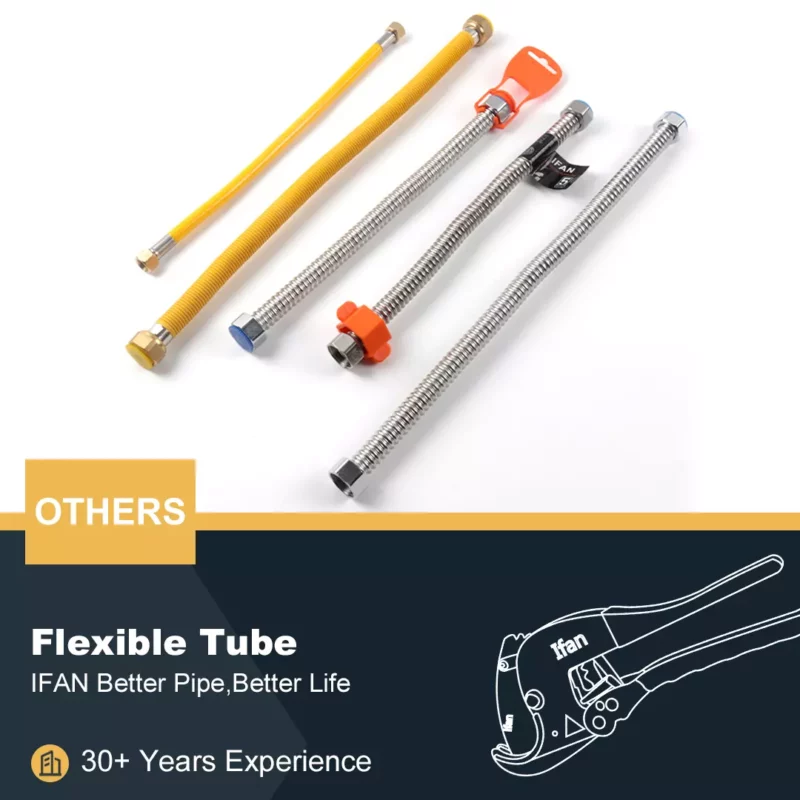
The stainless steel inner pipe features a corrugated design that bends easily without cracking or kinking under stress.
Bonding Method Enhances Stability
Manufacturers use thermal bonding to attach the PE layer firmly to the steel pipe, preventing any separation.
Insulation Maintains Temperature
The insulation layer between PE and steel reduces temperature loss and prevents external condensation buildup during cold use.
Length Customization Supports Projects
Factories can produce these pipes in customized lengths, matching different project needs and reducing on-site cutting.
Diameter Variety Covers More Systems
Manufacturers offer diameters from 12mm to 100mm, allowing installation in both residential and industrial systems.
Stainless Steel Type Resists Corrosion
The inner corrugated pipe usually uses 304 or 316L stainless steel, which resists rust and chemical reactions effectively.
Pressure Resistance Supports HVAC Use
The structure handles pressure up to 1.6MPa, allowing use in HVAC, chilled water, and hot water systems.
Installation Efficiency Saves Labor
The pipe’s flexibility reduces joint use, lowering labor time and minimizing leakage risk due to fewer connection points.
Packing Method Ensures Transport Safety
Factories coil the pipe and wrap it in protective film, securing the product during transportation and long-term storage.
If you have read this article and have any questions, please feel free to contact IFAN. Below is our contact information:
Whatsapp:+86 13373827623
Email:[email protected]